
Blessed by adoption
Empanadas
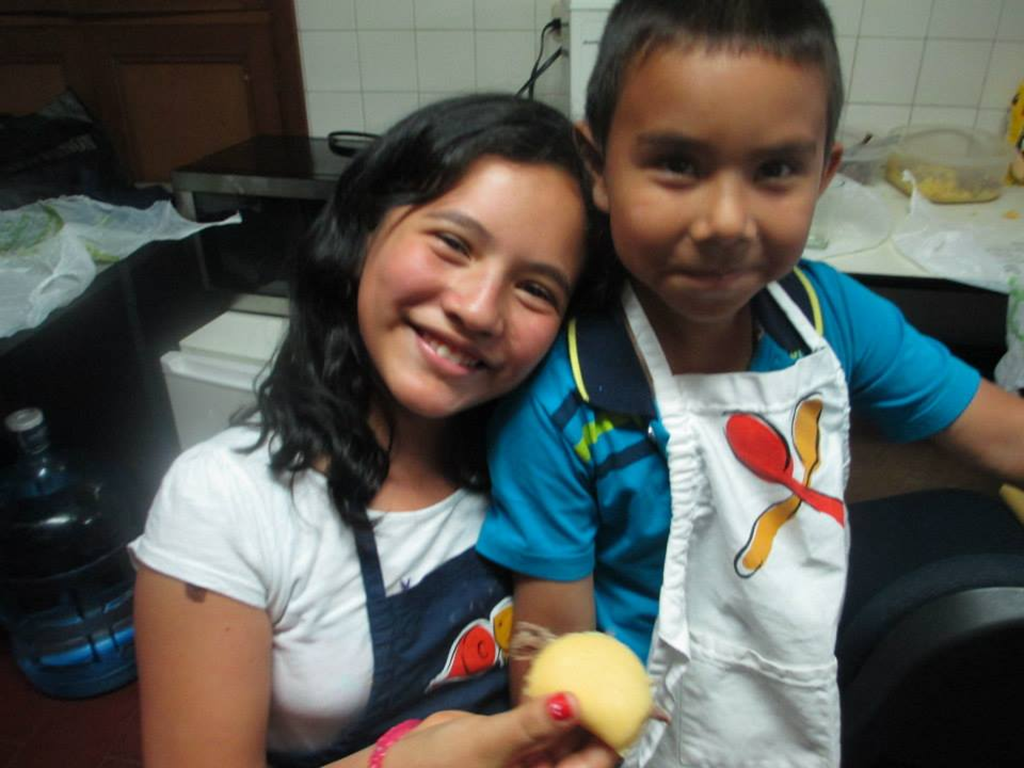
Juliana, 12, and Santiago, 6, getting ready to learn how to make empanadas at the Zuetana where we stayed in Bogotá.
In 2013, I spent six weeks and one day in Colombia. You could say it was my maternity leave after a nine-month-plus pregnancy. It was well worth the wait — and a bonus, no weight gain!
November is National Adoption Month, dedicated to raising awareness about the need for adoptive families for children not only within the United States but around the world.

Juliana and Santiago at a playground in Bogotá.
My then-husband and I had decided to adopt older siblings after thoroughly researching the different types of adoptions, both in the U.S. and internationally. We were led to the South American country and used an agency named Grace International. After we received our referral, it took just a moment to decide. Of course, these children were ours — they were handpicked, God’s precious gifts to us. (“Every good and perfect gift is from above,” James 1:17).
Our daughter was 12 at the time, and our son was 6. While Santiago stayed with foster families, Juliana spent six years of her childhood in an all-girls Catholic orphanage. She was the oldest there and was on the cusp of aging out. We heard stories from Sister Amparo, the nun in charge of the home, that being there for so long was starting to weigh on Juliana, especially when she would have to say goodbye to other girls who had found their forever families.
She was failing classes; losing hope. She thought it wasn’t going to happen, that no one wants a 12-year-old. When she learned of us — a couple from the United States who wanted to welcome her and her little brother as their own — Sister said everything changed. Her hope returned, her grades were getting better and she was happy.
We met in Pereira, where the kids were from, about a three-to-five-hour drive from the capital, or an hour by plane as long as the weather cooperates (they are quite often canceled). The airport is located in a mountainous region with difficult terrain that can lead to turbulent weather conditions and limited visibility for landings and takeoffs. Thankfully, our trips to and from were always smooth ( I don’t handle turbulence all that well). The majority of our time, though, was spent in Bogotá, the melting pot of Colombia.

Juliana, 12, and Santiago, 6, at the Catedral de Sal (Salt Cathedral), an underground Roman Catholic church built within the tunnels of a salt mine 200 meters underground. Located north of Bogotá, it’s a popular tourist attraction and place of pilgrimage within the country.
There we met other couples and single parents, with whom my kids and I are still friends today: a couple from California, and others from Long Island, NYC and Maryland. Two other families were heading back to Italy once their adoption was finalized. What’s nice is in Bogotá, there’s a hotel called Zuetana that’s specially designed to accommodate families who are adopting. We bonded over day trips, dinners, frustrations, concerns, joys and the idea of finally becoming parents. No one can truly understand the enormity of your emotions during this transitional time like those you meet along the way.
(A neat side note about the Zuetana, too. My daughter is getting married on Nov. 30. Her fiancé Jhon is also adopted and stayed at the same Zuetana, in the very same apartment. He and his family left the hotel a day or two before we arrived. Juliana and Jhon met six years later through a mutual friend.)
We were given opportunities to learn how to cook traditional Colombian foods like arepas and meals like a bandeja paisa, which consists of beans, rice, arepas, chorizo, plantains, chicharrones, avocado and beef (if you decide to try it sometime, make sure you’re hungry because it’s a full plate of nothing but savory goodness). Our time together in Colombia was during the Fall, so our hosts also went to great lengths to help us celebrate Thanksgiving together. The kindness and care that went into making us feel at home was authentic. And when we actually did return home to the U.S., the care, enthusiasm and support continued. We left as a couple and came back as a family of four.
Within six months of being home, I was pregnant, and in January of the following year, I had a healthy baby boy, Jonathan. I was a new mom of a pre-teen, a Kindergartener and an infant, the oldest two still learning their new language. Oh, the stories!
One story in particular stays with me, though. It was an afternoon when Juliana, Santiago, Jonathan and I took a walk in our neighborhood to Kinney Drugs. We were at the checkout when the friendly store associate asked if all my kids were born with blonde hair. I looked at her, a little puzzled, because I wasn’t quite sure if she was serious. Instead of providing the long version, I responded “No, just the one in the stroller. We walked out and I couldn’t help but smile. She recognized what was most important: We were a family.
 Buñuelos: A Colombian staple during the Christmas season
Want to try a traditional Colombian treat for the holidays? The following is a delicious recipe for buñuelos from mycolombianrecipes.com. The direct link is https://www.mycolombianrecipes.com/bunuelos-colombianos-colombian-bunuelos/
Ingredients:
- Canola or Vegetable oil for frying
- 1 + ¾ cup cornstarch
- ¼ cup yuca flour or tapioca starch
- 1 cup finely grated feta cheese
- 1 cup finely grated Queso fresco or fresh farmer’s cheese
- 1 egg
- ½ teaspoon baking powder
- 2 tablespoons sugar
- Pinch salt
- 5 tablespoons milk or more if necessary
Instructions:
- Place all the ingredients, except the oil in a medium bowl and mix well using your hands until soft and smooth dough is obtained.
- Form small balls using your hands.
- In a deep pot, heat the vegetable oil to 300°F (Warm, not very hot). Carefully drop the balls in the warm oil and fry for about 3 to 4 minutes or until gilden brown.
- Remove from the oil and drain on a plate lined with paper towels. Serve.
Notes:
Frying Colombian buñuelos using the right temperature is very important. The oil can’t be very hot or very cold. Be sure the oil is heated to 300 to 320 grades F.