Finding her true self
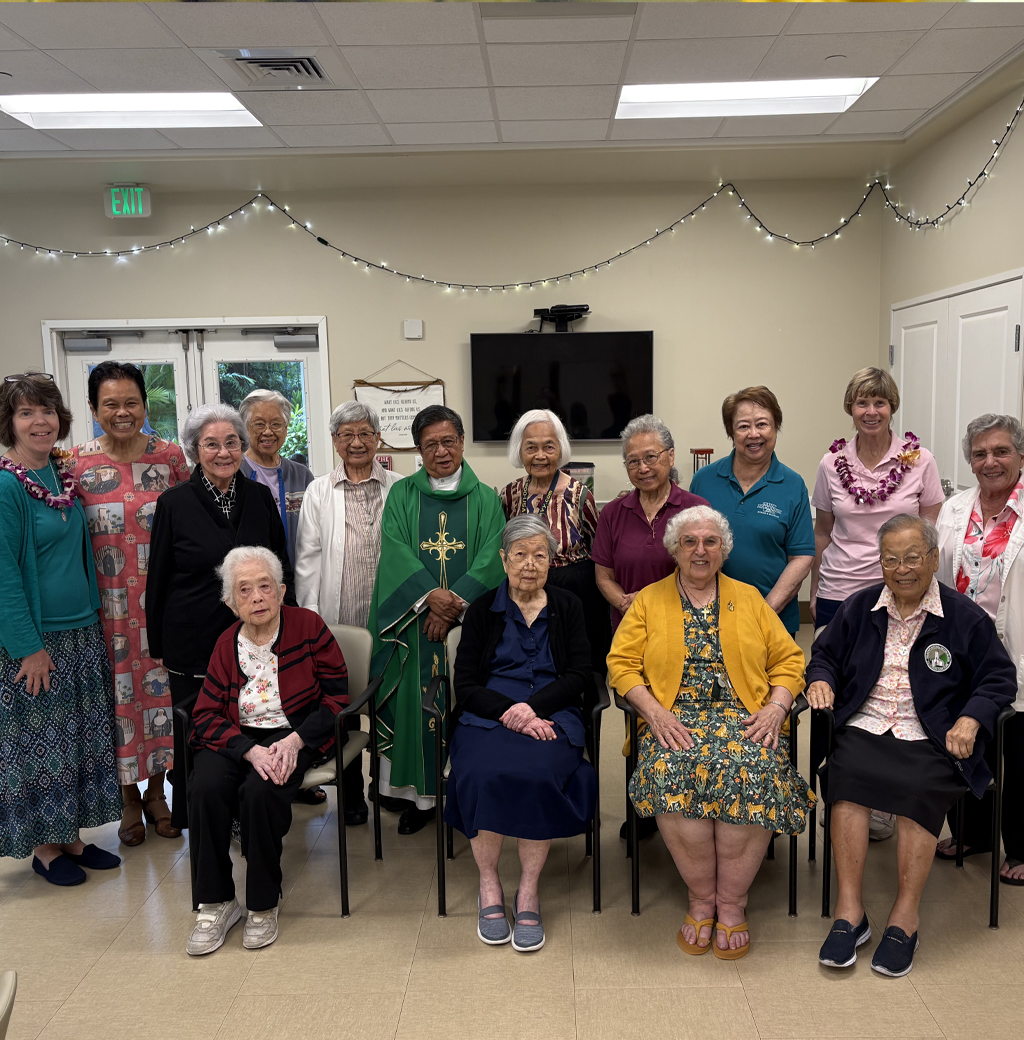
group photo
Sr. Amy Williams OSF, (far left) reconnects with a group of sisters during a trip to Honolulu in November 2025
Sr. Amy Williams, OSF, talks about her life of leadership
Joys of religious life: Part 1
Sister Amy Williams, OSF, had a long professional career in the legal field and then as a hospice nurse. Born and raised in Pittsburgh, Penn., she attended a Catholic elementary school and a public high school. She earned an associate’s degree and a bachelor’s degree at LaRoche College in Pittsburgh. She also earned certification as a hospice and palliative care nurse. Sister Amy said her friends and family would describe her as quiet, contemplative, dependable, and a good listener. She never imagined she would be called by God to serve as a religious sister. We asked Sr. Amy about her journey to religious life and the gifts and blessings she has received in her vocation.
Q. What is your professional background?
A. I entered religious life at the age of 34. Prior to becoming a sister, I worked for many years as a legal secretary, first for a plaintiff’s attorney and then for a defense firm. Many years later, as a hospice nurse, I facilitated family meetings and provided guidance to patients and families in making difficult decisions regarding end-of-life care. I did not consider this work as “leadership” at the time, but can now see that taking the role of leader was needed in these difficult situations.
Q. When did you decide to enter the Franciscan Order?
A. I was happy as a single adult, but there was always something missing. Following the death of a loved one, I began to hear God calling me to become a sister. I tried to resist and held firm to my hope of one day being a wife and mother, but God had a different plan for my life. I eventually attended a discernment retreat in the Diocese of Pittsburgh, hoping that I would be able to close the door on religious life once and for all. It was at this discernment retreat that I met the vocation director for my community. I began attending retreats and gatherings with the Sisters of St. Francis of Millvale (a group that merged with the larger congregation of the Sisters of Saint Francis of the Neumann Communities) and got to know the sisters on a deeper level. They welcomed me into their “home” and, in many ways, welcomed me “home” to my true self. Eventually, it became clear that God was calling me to religious life.
Q. How long does it take to become a sister?
A. Formation begins with candidacy, a one- to two-year period in which we live in community to discern our call alongside the sisters as we come to know one another. The novitiate phase, which is two years, focuses on prayer, study, and deepening our understanding of Franciscan religious life. We begin ministering more actively, integrating what we are learning into the rhythm of daily community life. The next step is temporary profession where we profess vows for three years. This period allows us to live more fully the Franciscan charism while continuing to discern whether God is calling us to make a lifelong commitment.
Q. What are some misconceptions people have about being a sister?
A. During my time of discernment, part of my struggle and fear was connected to misconceptions I had about what it meant to be a Sister. These fears ranged from deep concerns (What if I am not “perfect” or “holy enough”?) to surface-level questions (Can I risk surrendering my job, home, security? What if it doesn’t work out for me?). One of the most helpful suggestions I received was from a vocation director who challenged me not to close the door to religious life until I had looked behind the door and actually witnessed what this life could be for me. Spending time with the Sisters helped me to learn that religious life is not about perfection; it is about depending upon and supporting one another in striving daily to be witnesses to the Gospel way of life.
Q. Can you describe your day-to-day work?
A. My work is in a place of transition. In order to accept a role on my community’s leadership team, I needed to resign from my full-time ministry as a hospice and palliative care nurse. Initially, I feared that I would greatly miss my role as a caregiver. However, as I move into my new role as a general councilor on leadership, I am coming to see that leadership is very much a pastoral role, which I feel comes naturally to me. I believe that many of the gifts and skills I was able to offer patients/families as a nurse will carry over naturally in the provision of pastoral care to my sisters.
Q. What are the challenges you experience?
A. I believe that a challenge faced by many newer members of religious communities is how to embrace without fear the rapidly changing landscape of religious life. Many communities currently face the realities of aging sisters with increasing health needs, deaths of sisters, and fewer vocations. We know that religious life is at a place of transformation, and that our religious vocations may be lived in vastly different ways over the next five, 10, 20 years. We currently live with many questions that do not yet have answers, but there is great excitement in the possibilities that are waiting beyond our vision. I believe that God will guide religious communities boldly and bravely into the future.
Q. What do you want our readers to know about your life and vocation?
A. My vocational journey and my religious life have been richly blessed. As I look back on the fears and anxieties that challenged me during my years of discernment, I realize that I could never have imagined the gifts waiting beyond the door I had such reluctance to open. The greatest gifts have been the countless relationships formed over the past 20 years, both in community and ministry, which have transformed me and filled my life with joy. My life was full before community; now, my life is overflowing with abundance. My trust in God and love for all of creation give me peace and certain hope for the future.