The building is empty, but the foundation remains
IMG_2557
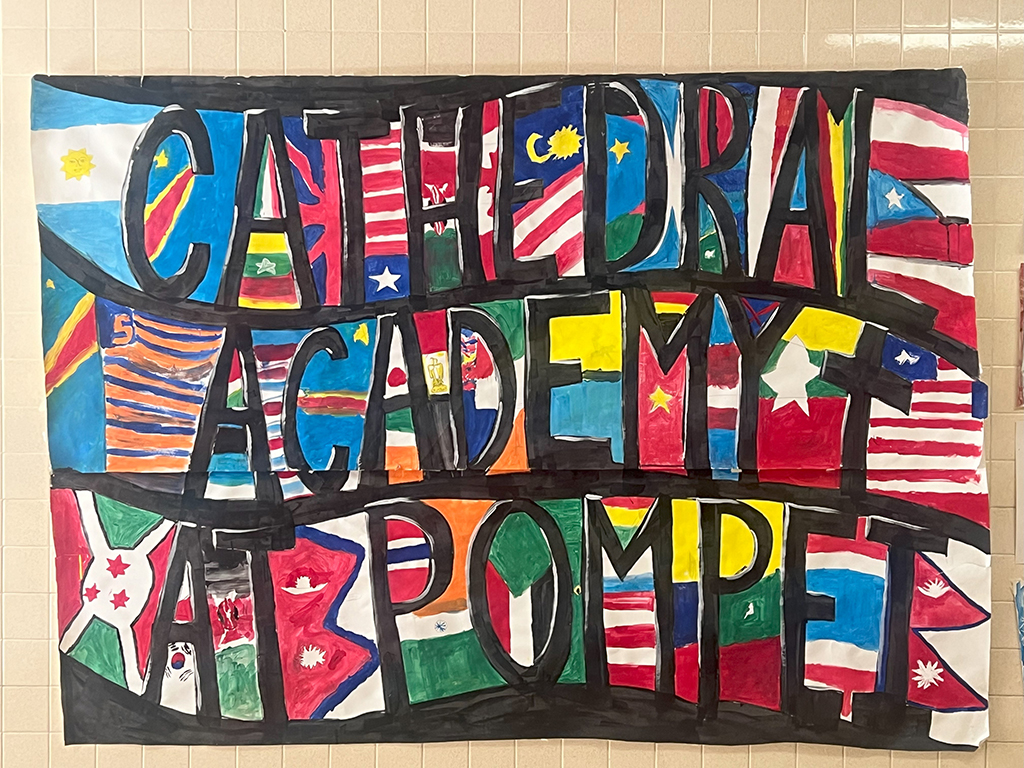
A mural in the main school hallway celebrated the flags of the nations represented by the CAP student body.
ABOVE: A mural in the main school hallway celebrated the flags of the nations represented by the CAP student bod
Cathedral at Pompei School closes after 108 years
By Eileen Jevis, staff writer
After 108 years educating thousands of students on the city’s north side and providing a strong foundation of faith, Pompei School, known as Cathedral School at Pompei (CAP), closed its doors in June due to low enrollment and financial challenges.
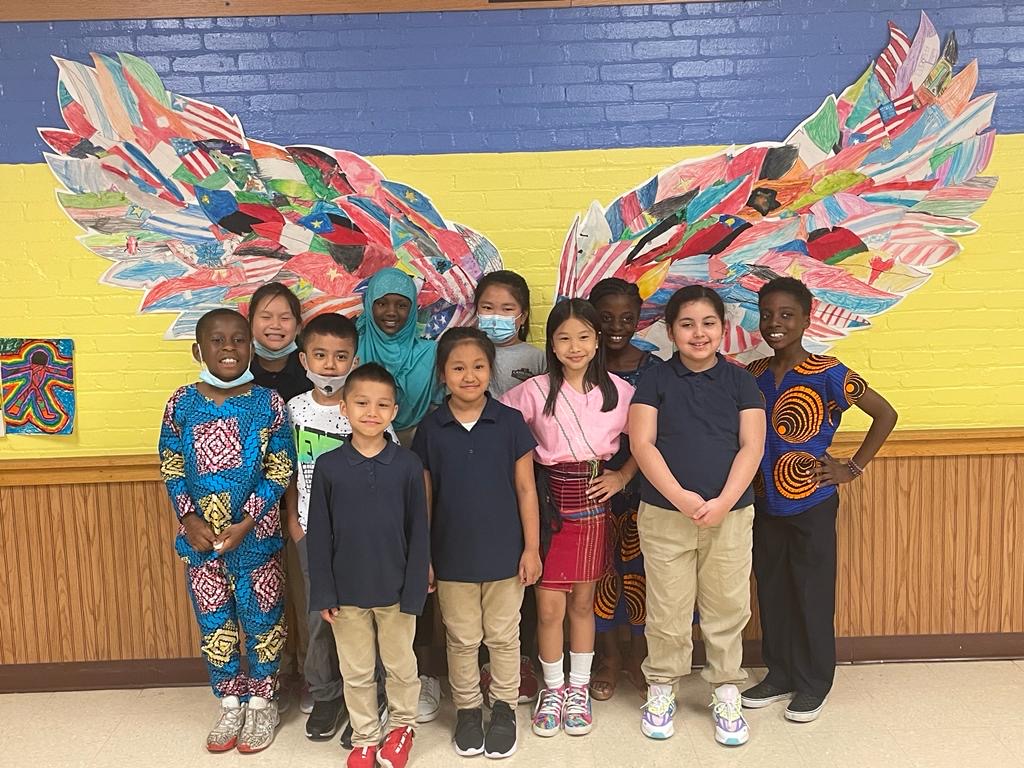
Students, some in the traditional garb of their ethnic homelands, gathered with “wings” reflecting their heritage through flags of their native lands.
In a letter to the Pompei parish community, Father Daniel Caruso said that although the school is closing, the parish is not. “The strength of our community is seen in all that was done to support the work of our school, including the many volunteers who gave so much of themselves.” Fr. Caruso said that as a parish community however, they could not allow themselves to exist only to take care of each other. “Our continued strength as a parish will be found in doing what was done in our school, namely, sharing the Good News of Jesus Christ with those around us.” The school, he said, was founded to reach out to new Americans to help them become good citizens and good disciples.
As the number of new Americans grew each year, the administration and staff celebrated the cultures of the diverse student body. Math teacher Cheryl Canfield said the Cultural Fair held each year was one of the most memorable events at the school. The fair provided an opportunity for students to teach the school community about their heritage by offering ethnic foods and pictorial presentations depicting customs, dress and their family origins.
For those who grew up on the city’s north side, the traditions and memories of a Catholic education guided them through life. Matt Pisegna graduated from Our Lady of Pompei in 1976 and went on to Bishop Grimes High School. He said that attending a Catholic School had a positive impact on his life and gave him a solid education. He also developed strong relationships with friends, some of whom he keeps in touch with 48 years later. “Although the discipline may have been strict at times, its main goal was to teach morals and standards to live by that shaped you into a well-rounded, morally sound individual,” he said.
One of Pisegna’s favorite memories at Pompei was playing basketball in grades five through eight. “My eighth-grade season was the best of all. We had a solid team with a great coach and went on to great success.” He remembered fondly he and his teammates staying after school to prepare for game night. “We would each pitch in twenty-five cents and walk to DiLauro’s Bakery to buy a loaf of Italian bread and then go on to Squadrito’s Meat Market to buy a pound of salami for our pre-game meal. They were great times,” he said.
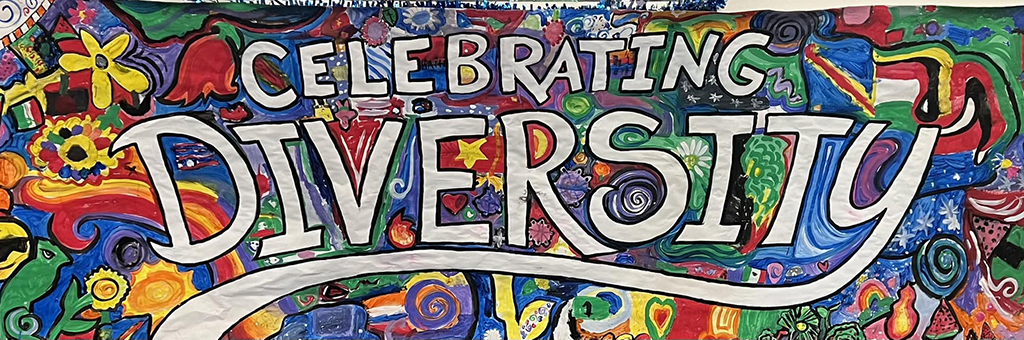
Another mural at the school celebrated the diverse ethnicities represented in the school. Diocesan school officials worked with other area Catholic schools to welcome displaced CAP students.
Tino Porrino and his wife both attended Our Lady of Pompei. The 1975 graduate said that his Catholic education had a lifelong impact on him as well. “Anyone who spent time in the classroom with the Sisters back then has a story or twenty of the strict control and discipline that was imposed by them,” he said. “Looking back, it was that demand for excellence and the examples set in the classroom that caused my wife and I to choose a Catholic education for our two daughters. Their experience at Our Lady of Pompei School was the primary reason they continued their educations at Catholic high schools and colleges, each pursuing careers in education.”
While Porrino has fond memories as a student, he also reminisced about getting into trouble. “My first run-in was in first grade in the lunch line. Sr. Mary Praxedes, whose reputation preceded her, came over and told me to remove my hands from my pockets,” he explained. “This went on for a few days, and then one day, she took me aside and with two huge safety pins, pinned my pockets closed.” Defiant, Porrino began putting his hands in his back pocket instead. “I won’t elaborate on the punishment that followed, but it paled to the punishment waiting for me when I got home from school.”
Support in transition
For decades, CAP provided a Catholic education for the Italian immigrants who settled on the northside of Syracuse. With the closing of Pompei, the majority of the students will transfer to Most Holy Rosary School on the westside of Syracuse. Most Holy Rosary pastor Father Fred Manara, principal Sherri Stone, Sister Helen Ann Charlebois, and the (MHR) faculty and staff will welcome the new students with open hearts and minds.
The school is looking for volunteers to help children with their reading and writing skills. Donations to cover the cost of field trips, supplies, uniforms, and other expenses would be appreciated. For information on how you can help, contact MHR school secretary Katie Zubrzycki at [email protected].