
A ‘Noble’ Vocation in Ordinary Time
Lucia Silecchia rgb
Abundant commentary preceding and following Blessed Fulton Sheen’s recent beatification prompted me to reread his autobiography, Treasure in Clay. I have no personal recollections of his life in the public square. However, as an autobiography, Treasure in Clay introduced him to me in that unique way that comes from a writer reflecting on his own life.
I was particularly interested in those passages where Bishop Sheen discussed the years he once taught at Catholic University, a blessing that is now mine. In those sections, he offered challenges to all who spend their lives as teachers — challenges that both inspire and intimidate!
To inspire, he boldly asserted, “Teaching is one of the noblest vocations on earth, for, in the last analysis, the purpose of all education is the knowledge and love of truth.” Reading these words could and should warm the hearts of all teachers. As the fall semester’s challenges are now in high gear, a reminder that teaching is a “noble vocation” is happy inspiration.
However, he spent more time challenging teachers — posing challenges rightly demanded of a “noble” vocation but, nevertheless, hard. Three, in particular, caught my attention.
First, Bishop Sheen lamented, “Teaching often becomes a communication from the notebook of the teacher to the notebook of the student without passing through the mind of either.” This is a critique of education reduced to mere information delivery.
In his day, Bishop Sheen may have been most concerned about uninspired teachers droning on to students who, uncritically and uninterestedly, record what is said just to boomerang it back on final exams. He warned that without the engagement of teacher and student with each other and with the substance of the material, education would devolve into a temptingly easy but bleak transaction between parties who remained intellectual strangers.
Today, however, as technology and economics make online and distance education attractive, Bishop Sheen’s lament seems particularly prescient. Education is now spoken of as “course delivery”; degrees can be earned by students who never met a single teacher or classmate, and AI tools are, paradoxically, praised for their ability to “personalize” education while simultaneously reducing or eliminating relationships with real people. While these new forms of education have benefits, they can also threaten the communication between student and teacher, fostering that sterile information transfer Bishop Sheen feared. In particular, those newly embarking on teaching careers will likely be called to embrace such technology. Education may look very different in the years ahead. For all navigating this brave new world, Bishop Sheen’s warning against education as mere information transfer seems well worth taking to heart lest teachers and students remain strangers in their joint enterprise.
Bishop Sheen’s next challenge sprung from advice he solicited from a teacher he admired and from whom he sought suggestions for great teaching. This advice included the directive to “[t]ear up your notes at the end of each year. There is nothing that so much destroys the intellectual growth of a teacher as the keeping of notes and the repetition of the same course the following year.” Bishop Sheen took this advice to heart and followed it in his own career.
This challenge is disconcerting. An old set of class notes is extraordinarily reassuring. Like well-worn shoes or comfort food, notes from prior semesters offer assurance that the path ahead is familiar, that material can be covered in the time allotted, and that there is a tried-and-true foundation for class preparation. Reviewing old notes gives teachers a clear sense of the class melody. Thus, new preparation improvises from that familiar melody, improving it every year, but not rewriting the symphony. Letting go of that is hard! But it follows from Bishop Sheen’s conviction that “A teacher who himself does not learn is no teacher.” He feared that routine repetition can hurt both teacher and student. Hence, he proposed this radical cure.
I am not fully ready to embrace this challenge. However, this coming spring I am teaching a new course and changing the textbook for an old course, giving old wine a brand-new wineskin. I have to admit that there is an irreplaceable excitement about this. It will certainly mean much more time, work, and, yes, some anxiety too. But it also comes with an enthusiasm that I think Bishop Sheen would recognize as the reward for forging new paths.
The third challenge is the hardest one because it should prick the conscience of all who teach. Bishop Sheen wrote, “I felt a deep moral obligation to students… In an age of social justice, one phase that seems neglected is the moral obligation of professors to give their students a just return for their tuition.” Whether students are receiving “a just return for their tuition” is a question for teachers like me to ask ourselves every day. (For teachers in public schools, the question is whether taxpayers are getting a “just return” for the significant tuition that their taxes pay.) Bishop Sheen frames this challenge as a question of justice, claiming that it is, simply, unjust to students when their teachers do not give all that they can.
Students, certainly, have their own responsibilities in the enterprise of education. But, as a teacher, the question I am challenged to ask each day is whether I am satisfying the demands of justice by giving my students “a just return for their tuition.” That is a tall order, and a humbling demand. Yet, perhaps, nothing less should be asked of those blessed to live out “one of the noblest vocations on earth” each working day of their ordinary time.
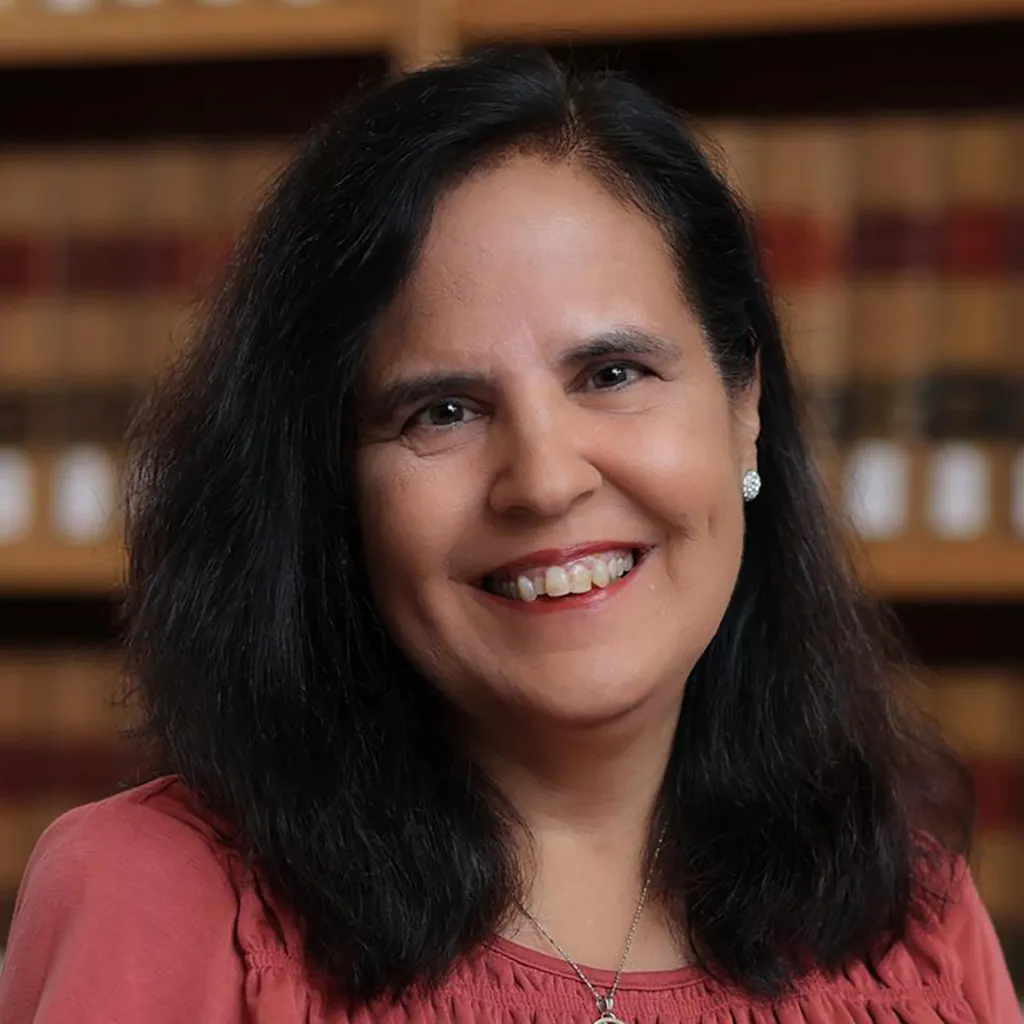
Lucia A. Silecchia is a professor of law at the Catholic University of America. “On Ordinary Times” is a biweekly column reflecting on the ways to find the sacred in the simple. Email her at [email protected].