Faith, culture, gratitude mark Jubilee Mass for three African priests
A9201688
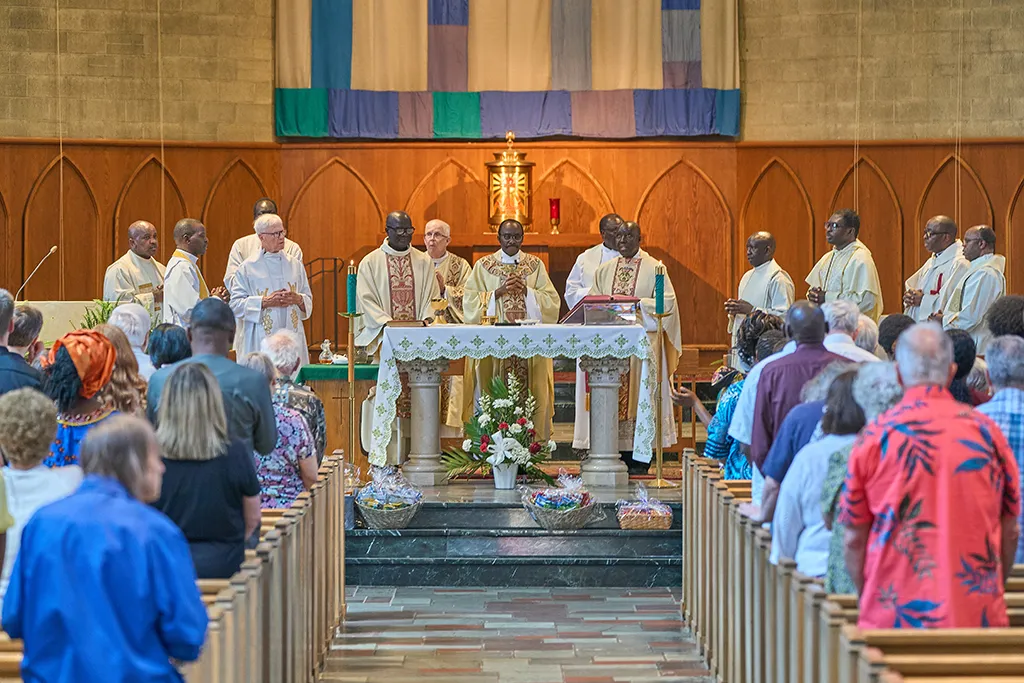
The African Jubilee Mass, held on June 21 at Blessed Sacrament in Syracuse, honored Monsignor Francis Osei-Nyarko, Father Innocent Onyenagubo, and Father Severine Yagaza. Each was ordained a priest in their native countries 40 years ago
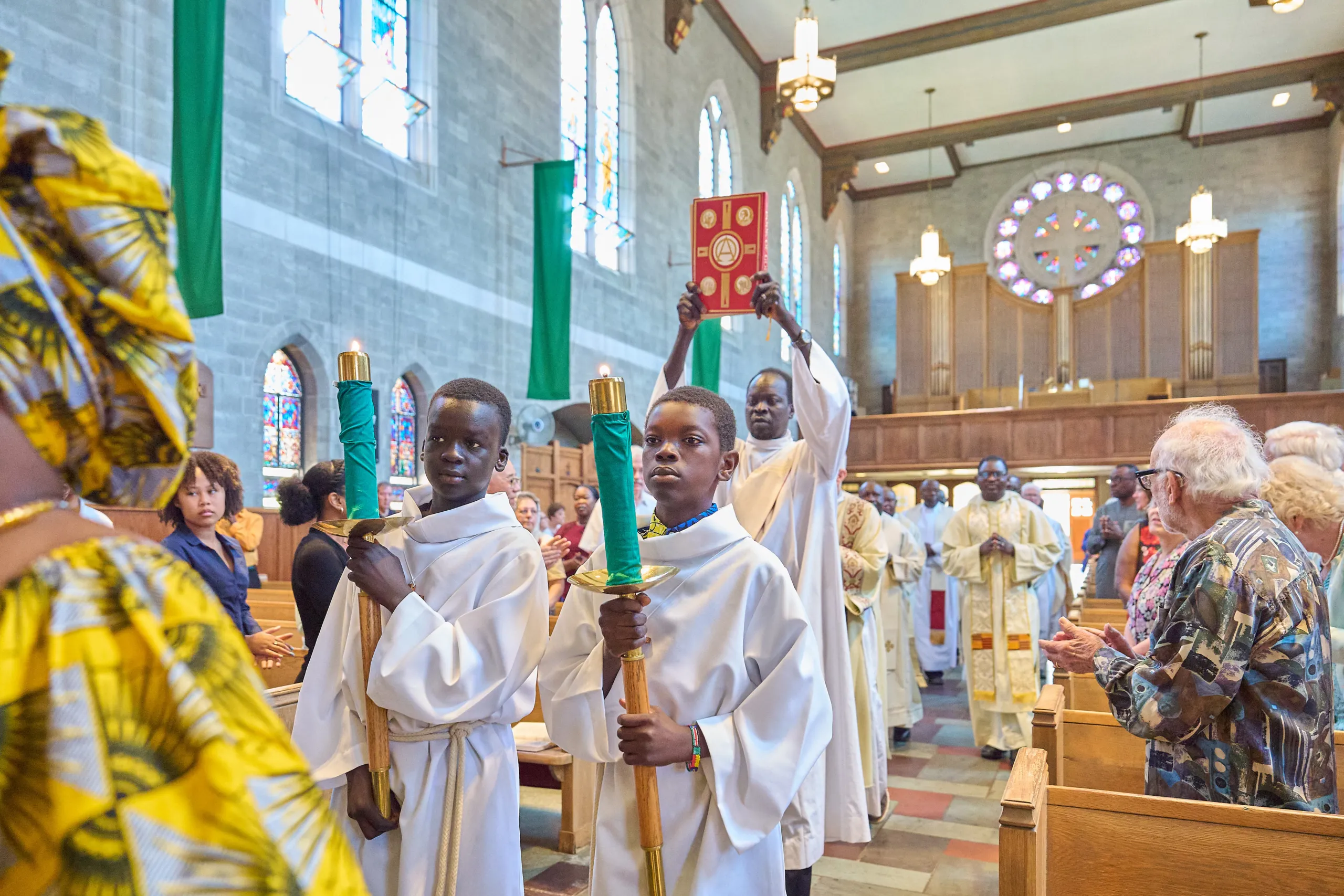
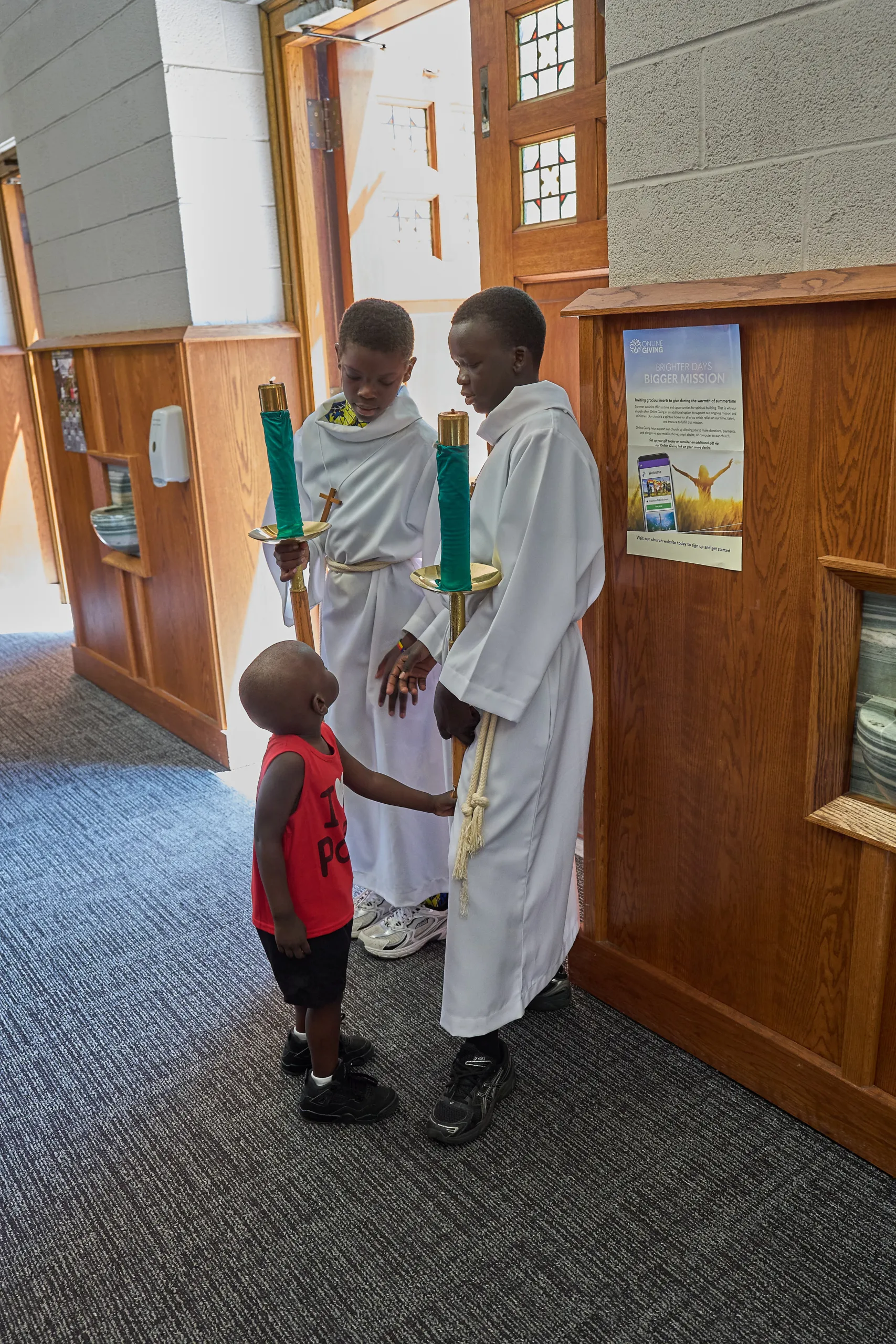
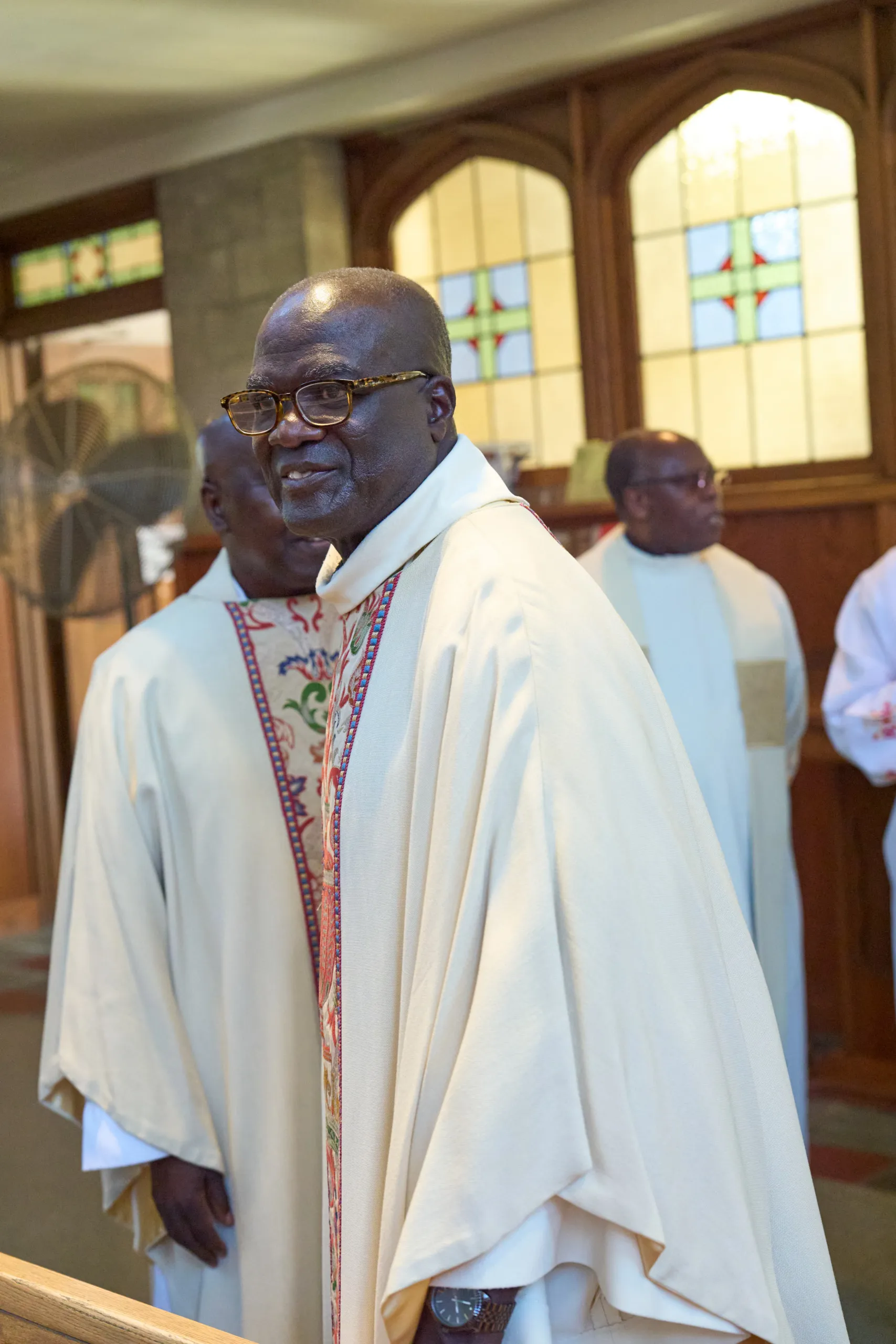
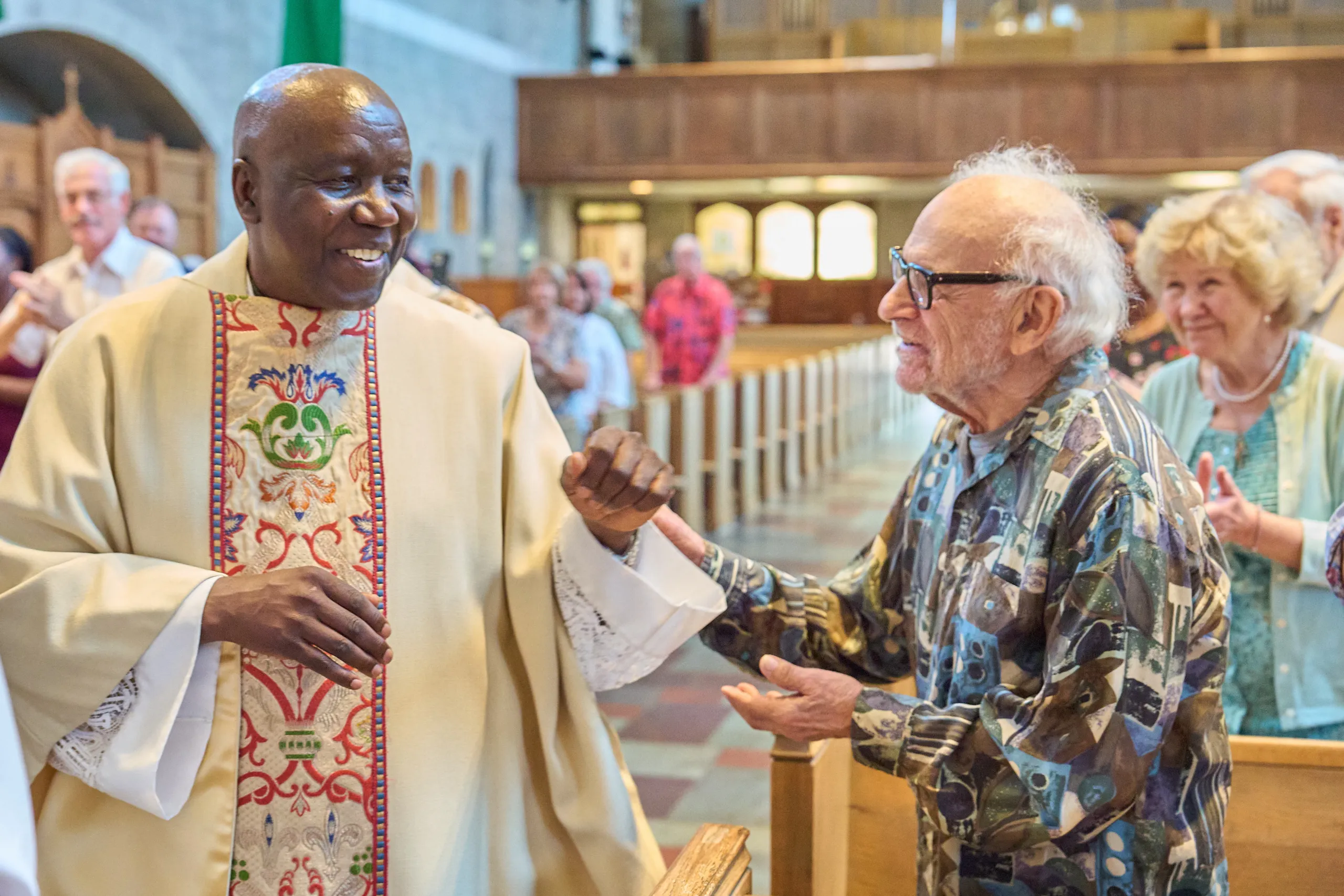
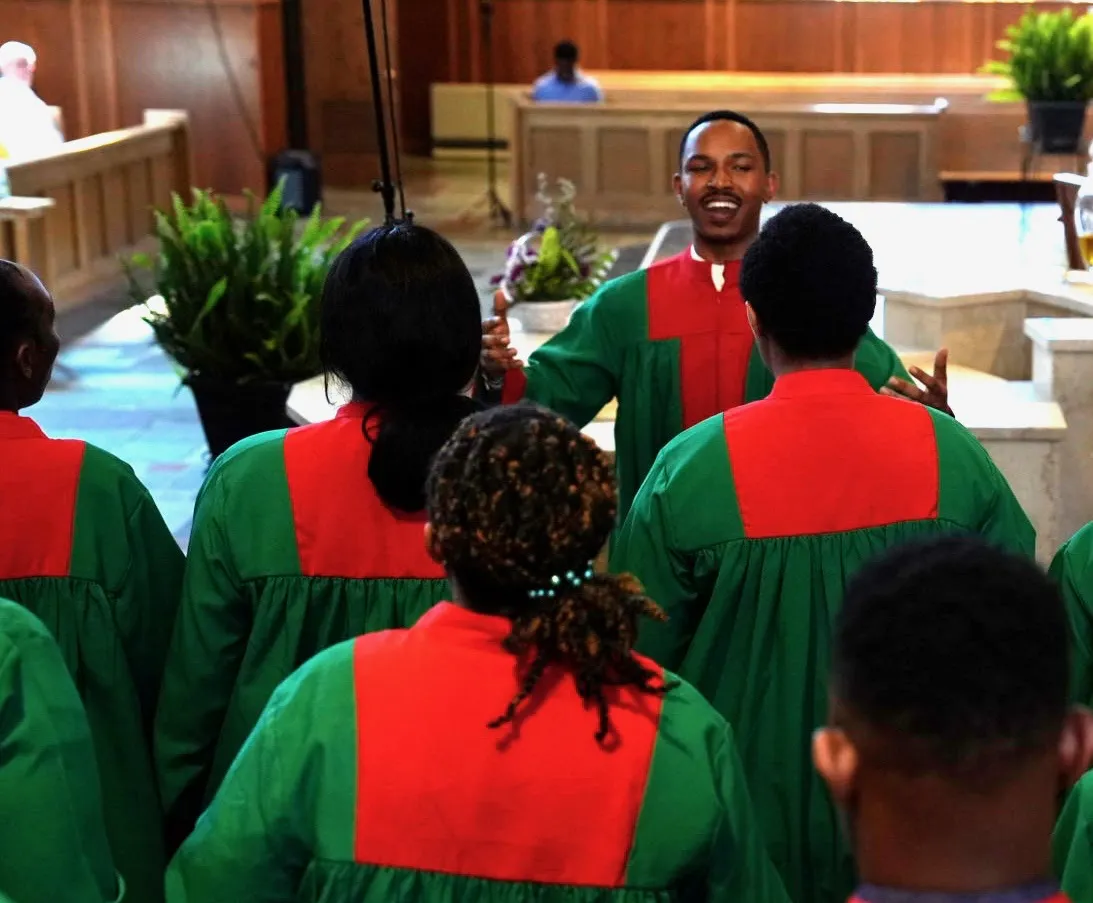
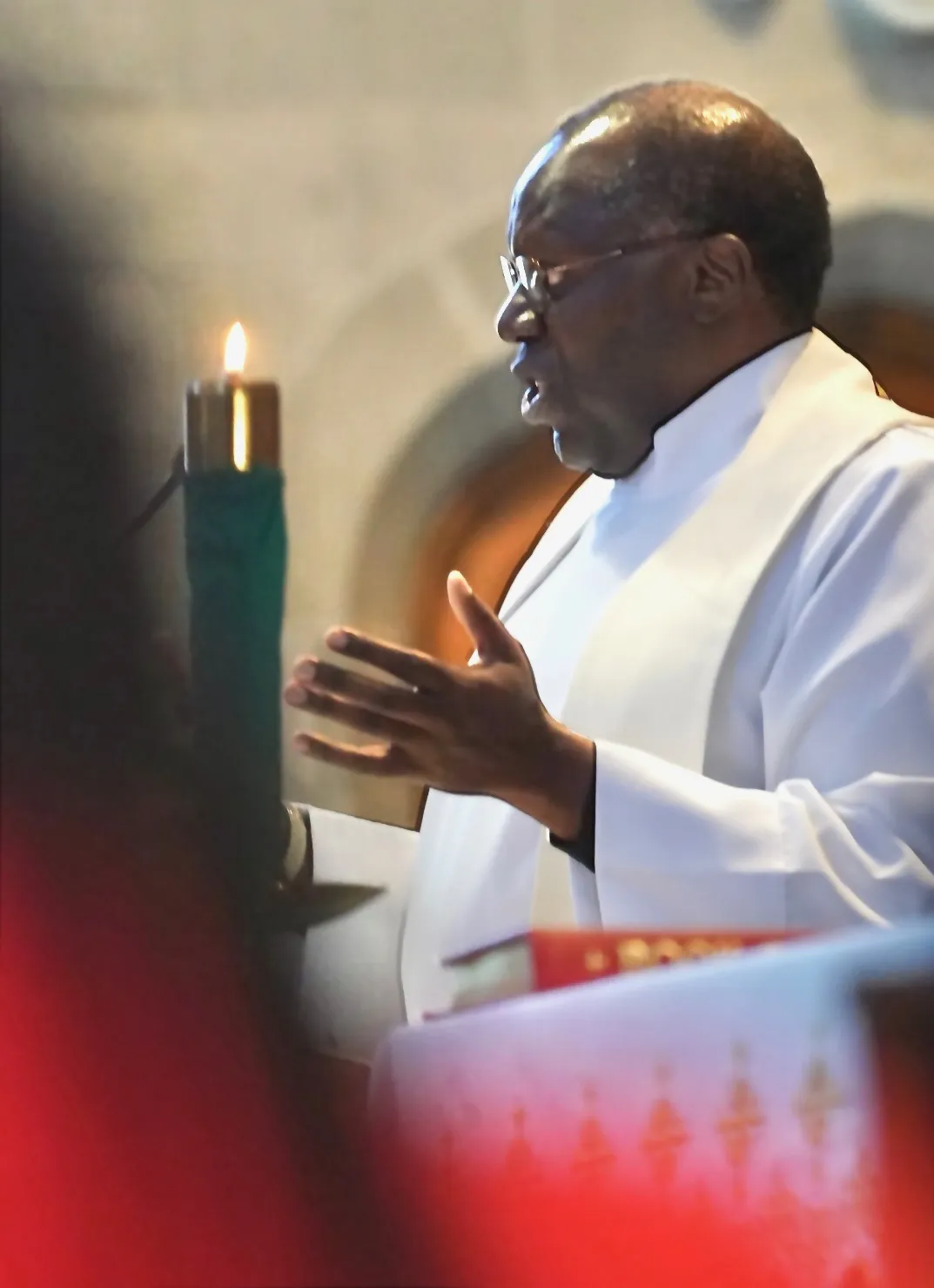
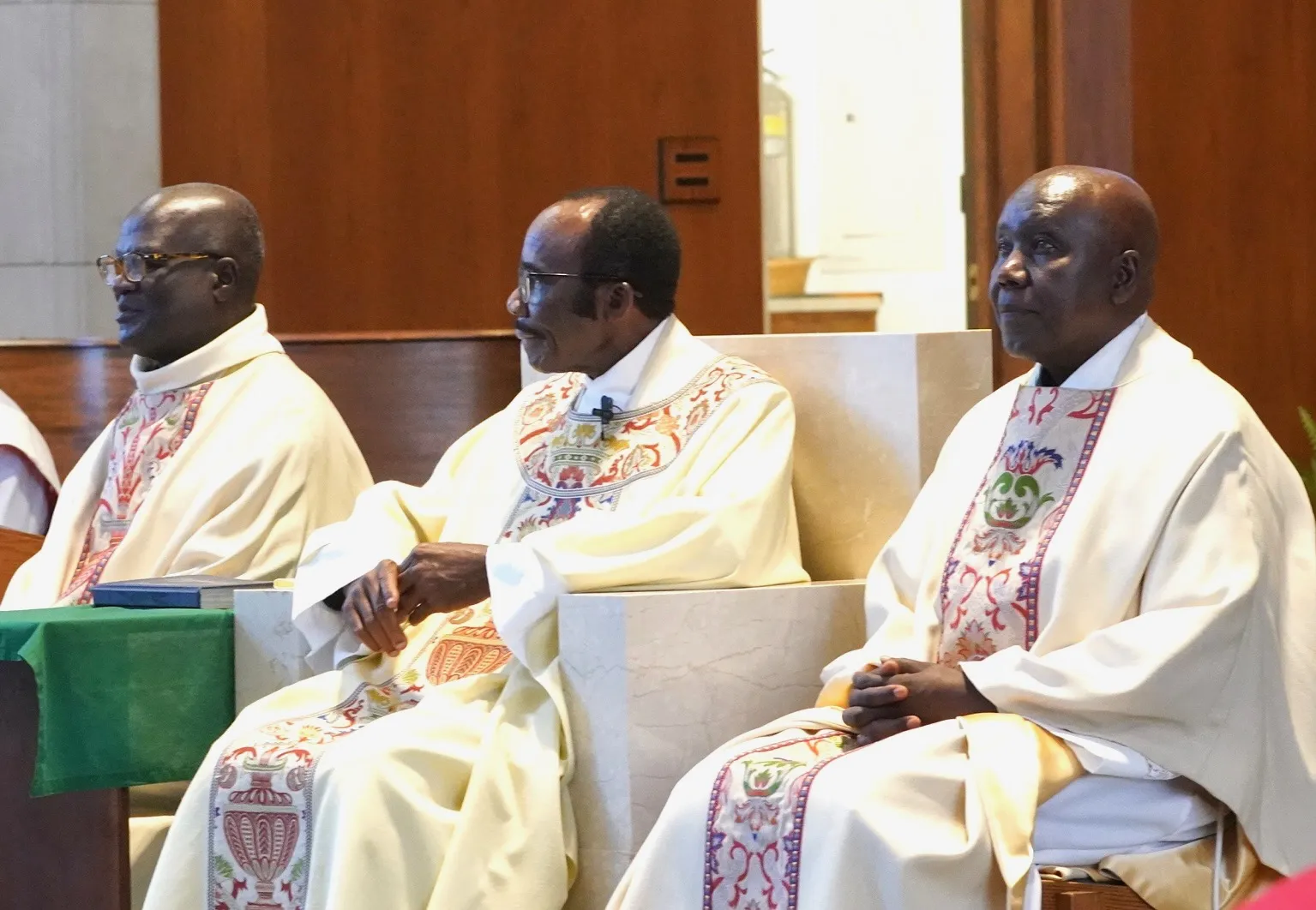
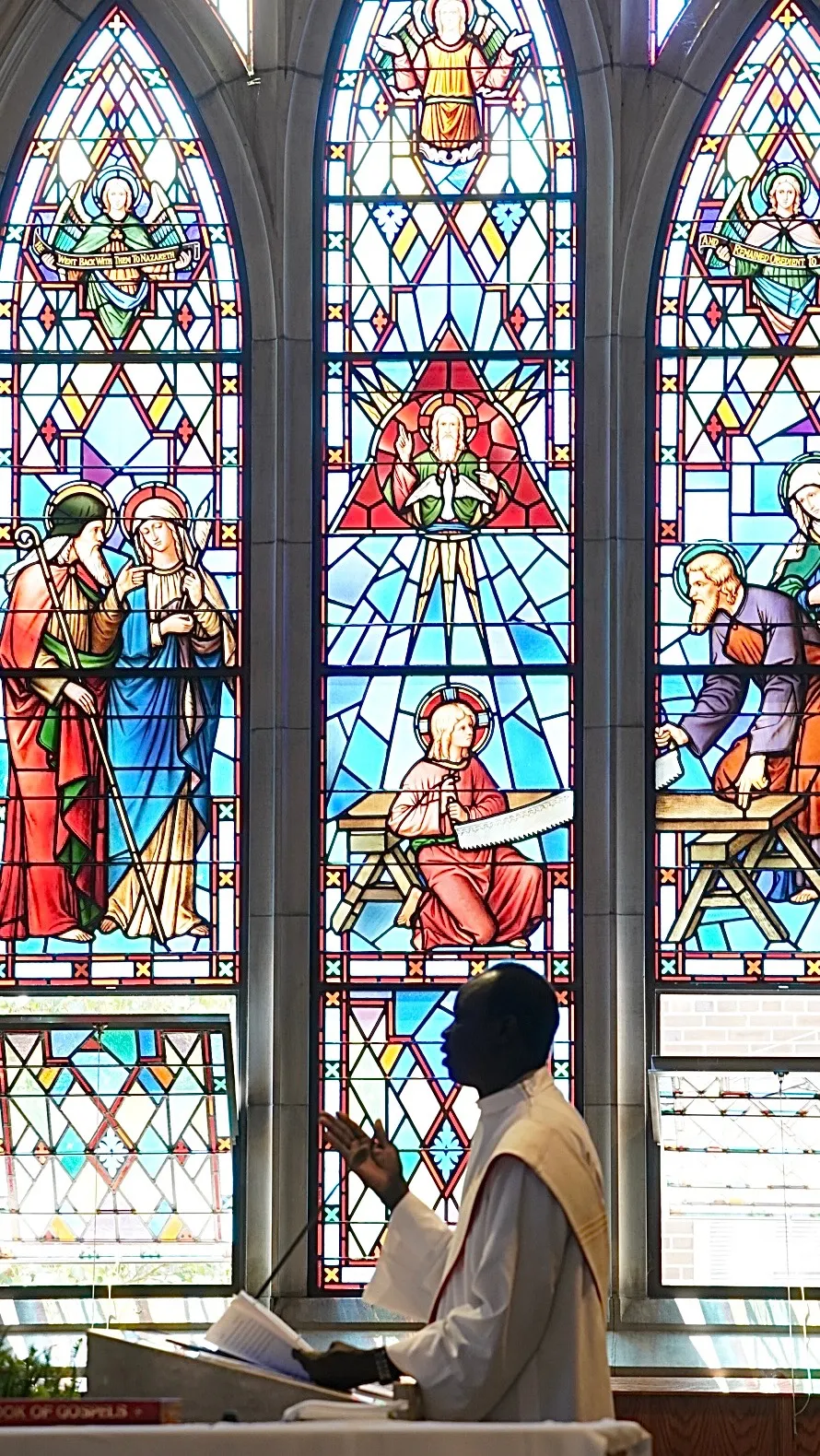
Three beloved African priests, each serving in the Diocese of Syracuse and each native to different countries, were honored with a special African Jubilee Mass at Blessed Sacrament on the afternoon of June 21. Each is celebrating a milestone 40th anniversary of ordination to the priesthood.
Father Severine Yagaza, a native of Tanzania, is the pastor of Blessed Sacrament and St. Vincent de Paul in Syracuse. Monsignor Francis Osei-Nyarko, a native of Ghana, is administrator of St. Anne, Mother of Mary in Mexico and Christ Our Light in Pulaski; and Father Innocent Onyenagubo, a Nigerian native, is a hospital chaplain at Upstate Medical University Hospital.
The joyful celebration was a testament to four decades of faithful service, sacrifice, and dedication to God’s people. Father Innocent presided over the Mass; Father Charles Opondo-Owora, pastor of St. James Church in Johnson City, provided the homily, and several visiting clergy were also there to concelebrate.
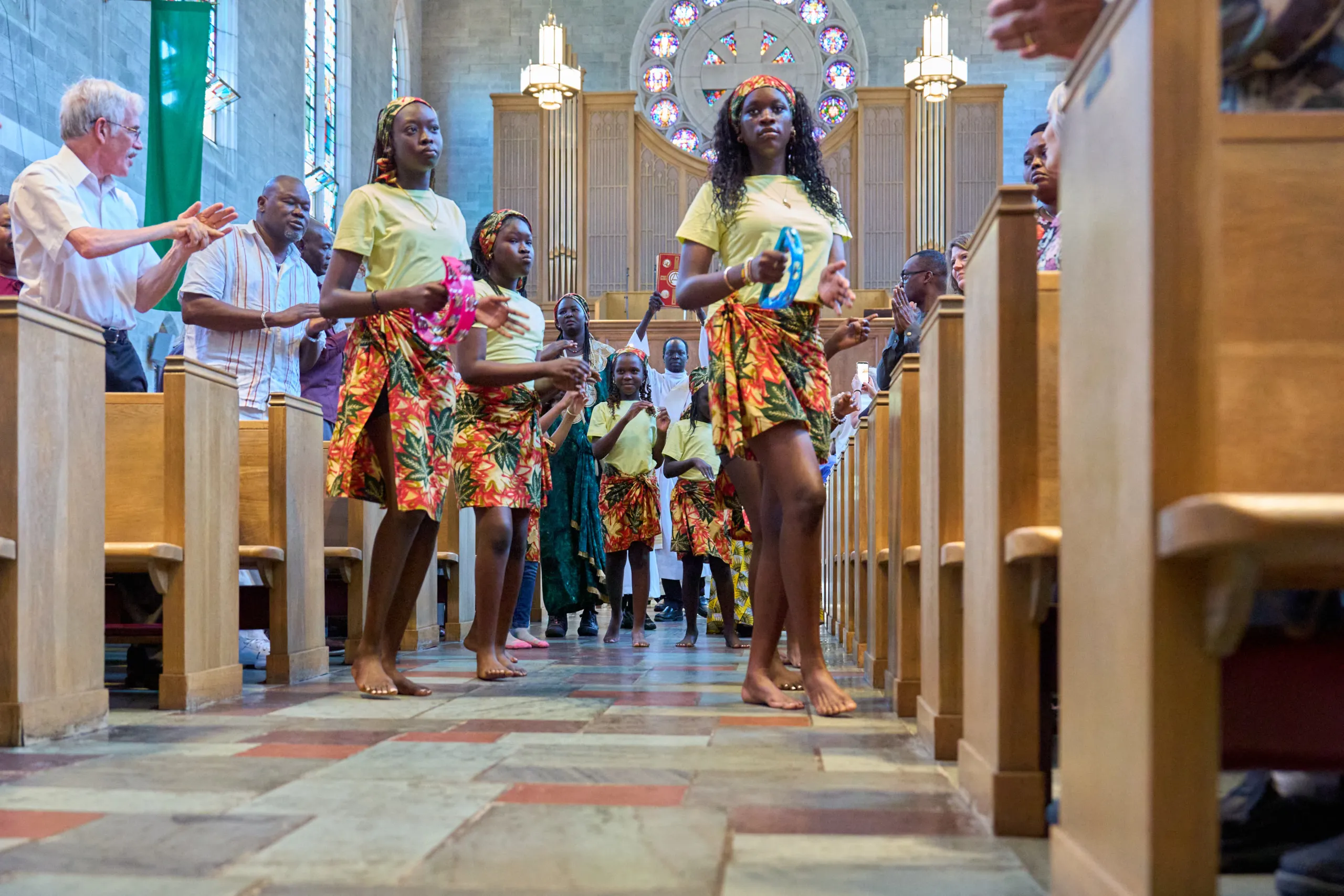
Liturgical dancers with tambourines swayed down the center aisle as the choir sang spirited, rhythmic songs of praise and worship. Many women wore brightly colored traditional attire accompanied by matching headwraps for a cheerful display of culture and community. Large baskets of fruit and other food items were brought forward during the offertory, expressing gratitude and generosity.
“Forty years ago, Monsignor Francis, Father Innocent, and myself, not knowing each other in different parts of the continent of Africa, were ordained to priesthood,” said Father Severine. He reflected on how this anniversary felt like coming “full circle,” as communities that celebrated his very first ordination were represented once again here in Syracuse. Citing the Second Epistle of Peter 3:8, he underscored that what feels like a lifetime to us is but a moment in God’s eternal perspective.
On behalf of each priest, Father Severine said they first thank God for His wondrous deeds throughout their 40 years of ministry, to their parents and families for allowing them to walk the path of holy vocation, and to all people in their countries of origin and in their current home of the United States and Syracuse who have supported them with prayers, love, friendship, and companionship.
Following Mass, all were welcome to a reception held at Blessed Sacrament School. “There is plenty of food,” Father said, “which needs hungry people,” confirming his desire to continue the celebration in a spirit of fellowship.
From Africa to America: Reflections on 40 years of priestly ministry
Editor’s note: The Catholic Sun reached out to Monsignor Francis Osei-Nyarko, Father Innocent Onyenagubo, and Father Severine Yagaza before the Jubilee Mass for a Q&A on their 40 years of priesthood. Father Severine’s reflection is below. We were unable to reach Monsignor Francis Osei-Nyarko and Father Innocent Onyenagubo before press time.
CS: Take us back 40 years. What do you remember most vividly about the day of your ordination?
SY: It was on Tuesday, June 24, 1986, the Solemnity of the Nativity of St. John the Baptist, when I was ordained a priest at the Cathedral of St. Anthony of Padua in the Diocese of Tanga in Tanzania. It was a very special day. Three other deacons of our diocese and me were ordained together. The Cathedral church was packed with many priests, religious, seminarians, family members, parishioners, and friends who attended the ordination liturgy to celebrate and witness this great event. Even today, I can vividly see and feel the joy-filled people of God on that occasion. I was so much overwhelmed and humbled with the ceremony itself and mostly with the outpouring love of God’s people who were there to accompany us on that occasion. I truly shivered to think that I was going to start my new life as the priest in the Church.
CS: You left your homeland to serve the Church abroad. What was that transition like, and what sacrifices did it require?
SY: Immediately after my ordination, I was assigned as an educator and formator at the diocesan Soni Minor Seminary, the ministry which lasted for eight years, and joined Elmira College in the Fall of 1994. While at Elmira College as a student, I also served as the campus minister and assisting parish priest at St. Casimir Church in Elmira and St. Charles Borromeo in Elmira Heights. Though our Catholic Church is one throughout the world, she has established herself in different cultures of the world. Entering the US was both exciting and challenging. I went through a cultural shock. I had to re-learn new ways of doing Church in the new world, different from my old country. One of the great cultural shocks I experienced was the culture of automobile, which would bring parishioners to church five minutes before Mass and allow them to leave the church grounds a minute after dismissal. This was unlike the Tanzanian Church, where I used to hang out with parishioners before and after Mass. Since many parishioners walk to church, they have more time to socialize among themselves when they come to church. So, I had to understand how to hold myself in the US Church.
CS: How has your African upbringing shaped the priest you are today?
SY: My African upbringing was very family-oriented. From early days of my life, I was expected to embrace the family, respect, and embrace family members of all ages. The concept of family extended from those with whom we shared blood to members of extended family, neighbors, and even strangers. I was expected to respect my elders and all those with age or professional authority. This formation has shaped my life as a priest to this moment. I am called not only to love God and people but to respect them too.
CS: Are there aspects of the Church in Africa that you wish Catholics in the United States embraced more fully?
SY: Small Christian communities empower Christians to meet in their own communities to ponder on the ways to live their faith in their daily settings. This model may help adult Catholics in the US rediscover their faith and live the Gospel outside formal liturgical settings. Maybe the Neocatechumenal Way may pave the way to help adults rediscover their faith and live the Gospel in their daily home/work settings.
CS: What traditions, values, or expressions of faith from your homeland have remained especially important to you throughout your priesthood?
SY: Love, respect, and service to people of all ages and backgrounds have remained the center of who I am as a priest.
CS: What moment in your ministry has brought you the greatest joy?
SY: Service to God’s people has brought me the greatest joy. My 40 years of priesthood have led me in eclectic spaces of ministry, whether as an educator and formator in a minor seminary, a graduate student in colleges and universities, a campus minister, a parish priest, or a hospital chaplain. I have loved each and every ministry I was assigned to since they all provided me the opportunity to serve God’s people.
CS: If you could give one piece of advice to young men discerning a vocation, what would it be?
SY: Our surrender to God’s will will always bring us joy and all the support. God will never abandon us when we say that YES to him. Young and naïve as she was, Mary responded to the call of God to be the mother of our Savior. Mary said, “Behold, I am the handmaid of the Lord. May it be done to me according to Your Word,” Lk. 1:38. From that first “Yes,” Mary lacked nothing in her life.
CS: After 40 years, what keeps your love for the priesthood alive?
SY: Service to God’s people has never stopped. I am called in all directions and in many ways to serve God’s people, whether in the administration of Sacraments, proclaiming God’s word, bringing comfort to the weary, or paying attention and listening to their joys or pains. God keeps sending me every day to serve His people. Yes, I am here to serve.