Celebrating Safe Environment Week
IMG_4012
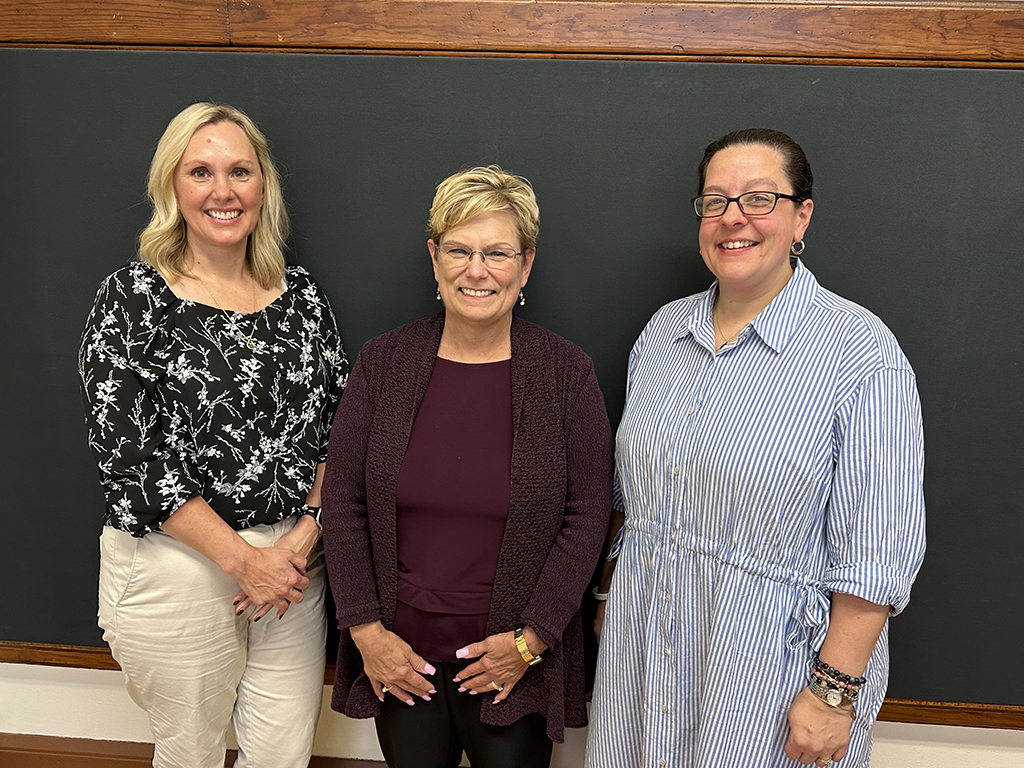
From left, Tracy Shaughnessy, Jacqueline Bressette and Julie Moss from the Office of Safe Environment
Safe Environment Week, recognizing the good work being done to protect children and vulnerable adults, is celebrated this year on Monday, November 18 through Sunday, November 24.
While the work of safe environment ministry is a 24-7 effort, there are two special times each year when we recognize those who dedicate their time and talent. Jacqueline Bressette, the diocesan Director of Safe Environment and Victim Assistance, said that Awareness Week each April focuses primarily on the training and the facilitators who work to educate every member of clergy and staff as well as volunteers who work with youth and vulnerable adults. In November, Safe Environment Week focuses more on the site coordinators across our seven-county diocese, the frontline people coordinating efforts at our schools, parishes and institutions.
“We should be celebrating all that we do because it is unique to the Catholic Church,” Bressette said. The topic of safe environment may conjure painful moments and memories, but the overriding success of raised awareness and reduced levels of reported violations over the past 21 years gives cause— not pause — for celebration. And Bressette and her team are very aware that the work continues.
For example, Julie Moss, the program coordinator for Safe Environment, reminded us that in September, the office rolled out an updated recertification training program as well as a revised and expanded Code of Conduct.
“We’ve been getting a lot of great feedback from those,” Moss said. She shared an extensive list of comments and aspects of the training that those attending noted as being important to them. These range from being able to note early warning signs of a potential problem to having the courage to speak up when something doesn’t seem quite right. Two comments, the only two in bold type, jumped off the pages: “I can make a difference” and “Safe Environment is the job of all of us.”
It’s all about the Code
Bressette said that the program’s Code of Conduct is at the heart of increased understanding and awareness leading to decreased code violations.
“The code of conduct really stresses upon people the expectations of their behaviors when volunteering or working with our kids across the diocese, so that has become a big part of our training,” she said. It’s a part that often generates deeper discussion in the training sessions. Bressette added the code is intended to help everyone involved.
“What we’ve been stressing is [that] the code is not there just to protect our most vulnerable. It also protects us adults, because sometimes we put ourselves in precarious situations that we don’t need to,” she explained. The code helps remind and reinforce discipline among those who follow it and helps avoid situations where someone could be “caught in the wrong place and time and could be falsely accused. We’re trying to prevent people from ever being in that predicament.”
Tracy Shaughnessy, the safe environment program assistant, said that people going through the training for the initial time may sometimes question why the training is required to be able to volunteer.
“We get people that call and say ‘I want to volunteer in the parish. I want to volunteer in the schools.’” Shaughnessy said that is often when people find out about the required training. “We explain why, how it helps, and then once they go through the training, it’s always interesting to see their comments. They not only say that it helped them, but they are encouraging and recommending other volunteers to do it, because they see the positives that come out of it.”
Moss adds that “Now, I think, 21 years in … people get it.” Still, the vigilance and oversight continue.
“This past year, for some reason, there was more reporting,” Bressette shared. “But we probably investigated 10 situations involving adults with kids that were code violations.” These are situations where no crime has been committed but a lack of good judgement was evident. The cases involved included not having enough adult supervision in a situation or the use of social media, texting and texting apps between adults and young people. Conversations with adults about code reminders and behavior corrections were necessary. Still, there are situations that require firmer action.
“This past year, three individuals lost their credentials,” Bressette said. “Their credentials were revoked because the code violations were so egregious. It was decided by the safe environment committee that we would choose the side of caution and remove the people from having access to our children.”
Bressette said there are another four or five cases that warranted written warning letters, including the admonition that an additional code lapse could result in loss of credentials and loss of employment.
“I think that’s really the good news about safe environment,” Bressette said, “because we’re probably one of the few, if not the only one [diocese] in the country that does this, really. I don’t know of any other diocese that does code violations.”
The Diocese of Syracuse has one of the most complete and exacting codes of conduct among dioceses in the United States, and it is the active level of accountability that sets our diocese apart and sets the bar high for safety and protection of those who need it.
Bressette added “You know, whatever incident comes up, when something happens. It makes us stop and say, Okay, how can we get better so it doesn’t happen again? What are we not doing? It’s not a matter of not doing it right? It’s a matter of how can we make it better for our kids and for our adults.”
More Info: Safe environment in action, on-site
“Safe Environment Week,” according to the diocesan website “is a time to acknowledge our clergy, members of religious orders, diocesan employees, volunteers, and so many others in the community who work tirelessly together toward a common goal: to prevent sexual abuse not only in our parishes, schools, or agencies but also in our neighborhoods and communities.”
We reached out to a few site coordinators to get their perspective on their role in the process as we mark Safe Environment Week:
Father Dennis Walker, administrator of the Church of the Nativity parishes and missions serving Tully, Pompey, Otisco and Lafayette in southern Onondaga County:
Father Walker sees his role as “ensuring that the diocesan Safe Environment guidelines are being followed and adhered to by all of our employees and volunteers who work with children.” It’s a role that requires paying consistent attention to his parish programs, but one that brings personal satisfaction to Father. “I am happy to be able to help make our parishes safer. Knowing that our parishes are following the guidelines helps me to feel that we are doing the right thing.”
Peter Myles, principal, Trinity Catholic School in Oswego:
Myles also feels personal satisfaction as part of his role in making sure students at Trinity Catholic feel safe through training of staff and scheduling classes for parents to be able to volunteer at school functions. He says he is “very satisfied to know that I am doing what I can and must do to protect our students.” He also sees increased awareness among the school community’s understanding. “I think the parents that have been with us for a while understand the importance of this program requirement. Every year, new parents to the school need to be introduced to this program so that they understand the importance and benefit of doing our part in protecting their child.”
Updated 11-14-2024 2:30PM