
‘Lectio divina’: Adding scriptural depth to our Lenten journey
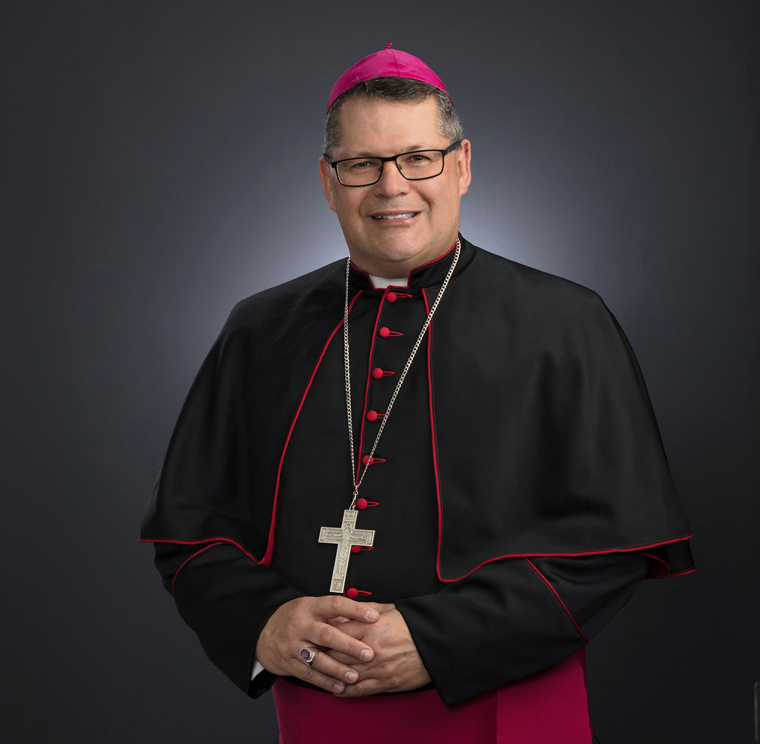
lucia-house cassock (1)
It might be hard to believe, but we have passed the midway point of the Lenten season. I am sure for those preparing for the Easter Sacraments, their anticipation grows. For others, there might be a certain dread of, “where has time gone and what have I really done this Lent?!” However, as the Bible proclaims to us 365 times – “Fear not!” I say this because the next two weeks of the Lenten Season have a character of their own and have been referred to in the Church’s Liturgical Calendar as “Passiontide.”
The idea that has come to me, especially if we think our Lenten observance has been lackluster, is that this would be a perfect time to focus our prayer on one of the Passion Narratives: Matthew, Chapters 26-28; Mark, Chapters 14-16; Luke, Chapters 22-24; or John, Chapters 13 and 18-21. Another idea is to pray with Jesus’ “Farewell (or Last Supper) Discourses” to his disciples as found in John, Chapters 14-17 which is Jesus’ parting message to his followers.
A helpful way I find to pray with Scripture passages, commonly referred to as, “Lectio Divina,” is the “Prayer of Fr. Olier”, founder of the Order of St. Sulpice (Sulpicians). The first part of the prayer is simply to predispose oneself to enter this time with the Lord and sit with the Word of God. What is often used in this moment is this prayer of Fr. Olier: “O Jesus, living in Mary, come and live in your servants, in the spirit of holiness, in the fullness of your power, in the perfection of your ways, in the truth of your virtues, in the communion of your mysteries. Rule over every adverse power, in your Spirit, for the glory of the Father. Amen.”
After the opening prayer, one is invited to read a passage from Sacred Scripture (in particular, the Gospels – although other Scripture passages can be used) and then to focus on three questions:
1) Jesus before my eyes – what is Jesus doing or saying in this scene?
2) Jesus in my heart – what is this Scripture passage stirring in me or saying to me in the depths of my being?
3) Jesus in my hands – how can the Word become flesh in my daily living?
As one engages in this prayer, journalling or simply jotting down one’s thoughts can allow a person to return to ideas that surface throughout the day or at other prayer times during the week. It is recommended that a person end the time of prayer with a reflective recitation of the “Our Father.”
I have used this method of meditation (lectio divina) for many years now and I find it most helpful in letting the Word of God work in me. For myself, I have decided that I am going to use the last two weeks of the Lenten season to focus on Jesus’ instruction to his disciples in the Johannine “Farewell Discourses” to bring my own Lenten pilgrimage into a greater focus.
Two saintly persons who can be models for our prayer in the weeks ahead are St. Joseph, Husband of Mary, and St. Patrick, Bishop. As one Scripture commentator notes about St. Joseph: “Joseph, husband of Mary and descendant of David, was a dreamer…it is in dreams that this Joseph finds his identity and calling. He dares to believe that God can and has revealed to him a new and awesome wonder. Rather than dwell in dreamland and leave the action to someone else, Joseph himself acts” (see Mt 1, 18-25; Mt 2, 13-14; Mt 2, 19-23) – Source: Little Rock Catholic Study Bible (2010), p. 1982. What a summary of the method of prayer I just shared with you!
The second model for our prayer is St. Patrick and the prayer he composed that is often referred to as, The Breastplate of St. Patrick:
Christ with me,
Christ before me,
Christ behind me,
Christ in me,
Christ beneath me,
Christ above me,
Christ on my right,
Christ on my left,
Christ when I lie down,
Christ when I sit down,
Christ when I arise,
Christ in the heart of every man who thinks of me,
Christ in the mouth of everyone who speaks of me,
Christ in every eye that sees me,
Christ in every ear that hears me.
Again, one can observe through this prayer Patrick seeking the presence of Christ in all the moments of his day and in those he encountered.
Yet, both these March saints would tell us that this journey of prayer is one we need to say “Yes” to, again and again. So “Fear not” if you are feeling a bit of disappointment in your Lenten journey so far, as the prophet Habakkuk reminds us, “the vision still has its time” (2:3). God’s blessings as you continue on your Lenten way! May God hold you in the palm of his hand!