Students Grow in Faith and Learn Leadership Skills
Sun photos l Chuck Wainwright
By Eileen Jevis
Staff writer
Oftentimes, when we think of young leaders, we imagine them leading sports teams, extracurricular events at school, shifts at their jobs or volunteer activities. But nurturing and preparing them to become leaders in the Universal Church is more important than ever as lay people are increasingly called upon to teach, promote and engage in the teachings of Christ.
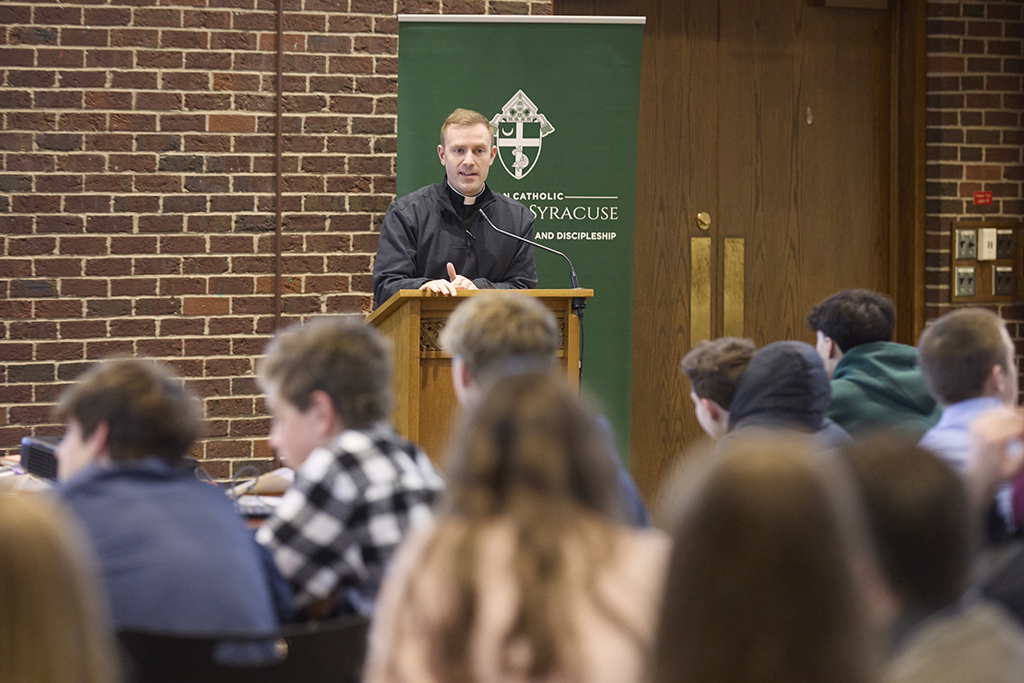
Fr. Brendan Foley shares his experiences along the path to faith leadership.
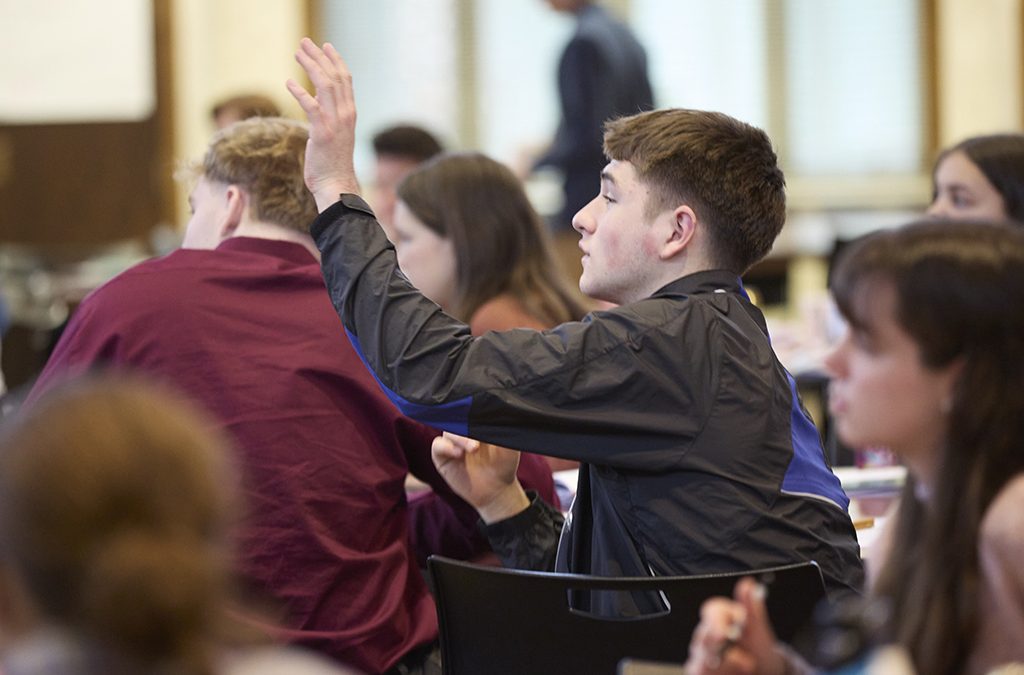
On March 2, young men and women from across the diocese spent the day in fellowship and prayer while learning the skills needed to become faith-based leaders. The day-long event, held at Immaculate Conception in Fayetteville, included interactive dialogue between priests and students, group activities and instruction and strategies given by keynote speaker Matt Davidson, Ph.D., president of the Excellence with Integrity Institute.
Father Jason Hage, director of the Office of Vocation Promotion, said the purpose of the day was to empower young people to respond to the call of leadership that Jesus is asking for. “I think that sometimes, we, as Catholics, find ourselves waiting for people in an official role to lead us,” he said. “But when you look at the Gospels and Jesus’ call to the first disciples, we learn that they left everything and followed him immediately.”
The time is now
Father Jason said that we often think that leadership is in every other arena except the church, so it’s important to activate and empower young people to be leaders in a space that is faith-based. “I think it’s good to remind young people that it is not just in the secular realm, but also in the realm of faith,” he said.

Seminarian Cornelius Deep chats with Quo Vadis participants.
There is untapped potential for young Catholics and Christians who are members of our community to become leaders now – not sometime in the future, explained Father Hage. “The goal is to help them understand that they are called to lead in whatever context they find themselves in – be it a Catholic or public school, a youth ministry program, etc. It is right now that Jesus is calling them.”
Dr. Davidson, who has more than 25 years’ experience in leadership and culture development, told those assembled that one of the most important aspects of the lessons covered is ‘game processing.’ “In our lives we get good at juggling lots of good things. But too often, we lose sight of the most important thing – our relationship with Jesus,” he said. “We need to slow down, prioritize, and protect the most important thing.”
Referring to Mark’s Gospel 8:36, ‘What good is it for someone to gain the whole world, yet forfeit their soul,’ Dr. Davidson told the students that discipleship requires the community of other believers to help us to stay true to ourselves. “The most important thing as a leader in the church is God and our faith,” he said.
Throughout the day, Dr. Davidson talked to the students about conflict resolution, different leadership characteristics, and how different mindsets affect the way one leads. “Fixed mindsets focus only on outcomes and not looking bad,” he explained. “Those with a fixed mindset fear and avoid challenges and may be ashamed and afraid of making mistakes. While those with a growth mindset focus on the process of getting better, embrace challenges, and use mistakes as a way to learn and grow.”
Lessons in leadership
Julie Zdep, a student at CBA and a parishioner at Immaculate Conception, said she came away from the retreat with increased self-awareness and a different perspective.
“I learned that a good leader makes sure everyone has the same expectations and rules that can be modified along the way to avoid any prolonged challenges,” she said.
Zdep especially enjoyed the interaction with the priests that were present, who were “put in the hotseat” as they answered questions about their vocation, their day-to-day lives, and their faith-based leadership practices.
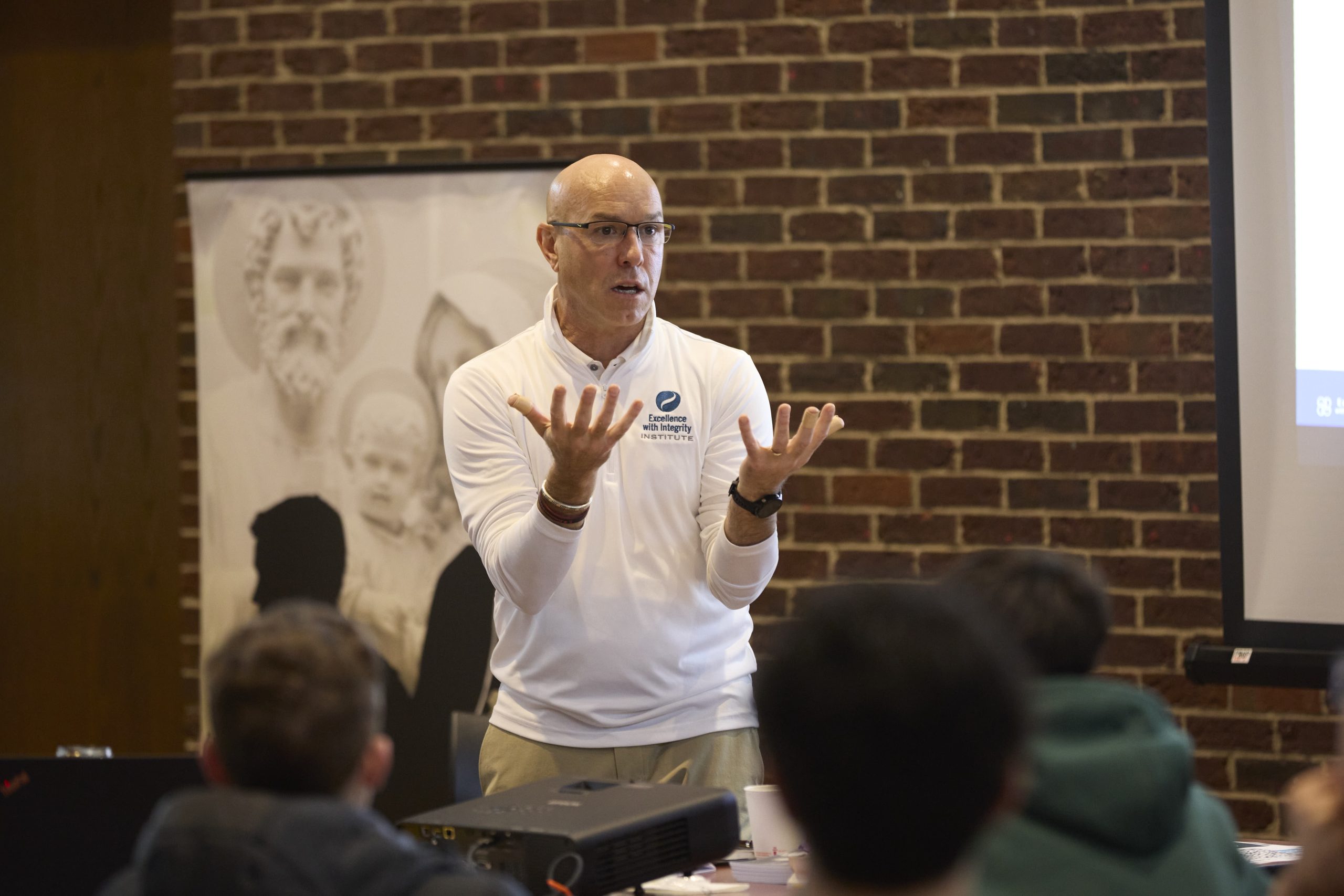
Dr. Matt Davidson implores attendees to answer their call
“I learned that conflict appears in all places, is unavoidable and is never easy, explained Zdep. “But if we approach it with humility and grace, God will help us through it. As Bishop Lucia explained, we need to surrender and put ourselves in a place of humility while dealing with conflicts on all sides and receiving the disharmony with open eyes and ears.”
“Understanding conflict must be undertaken through prayer in the light of the Holy Spirit so that we can understand and tackle it while considering each person’s perspective,” added Andrew Erickson, a senior at Seton Catholic High School in Binghamton. As the captain of multiple sports teams, the head of two student organizations, and a participant in a military summer camp, Andrew’s leadership qualities are well honed. The retreat gave him more confidence to follow the Lord’s will while trying to inspire others to do so as well. “It is evident there are young faithful Catholics eager to share their faith,” he said. “As a diocese, we need to support our young colleagues who can help the next generation pass on the great traditions of the church.”
“The objective for the day was to activate the power these teens have. It was to let them know that the Lord is calling them to be a heroic leader in his church and they have all the gifts they need to do that,” explained Father Hage. “They are made for so much more. So, the day was to help them acknowledge that when you give your life to Jesus, the possibilities are endless because you have no idea where the Lord might lead you.”
The event was co-sponsored by the Office of Adolescent Catechesis & Discipleship and the Office of Vocation Promotion. It was fully funded through a grant from the Koch Foundation (https://www.thekochfoundation.org/).