Divine Mercy Parish, Bishop celebrate feast day this weekend
IMG_2742
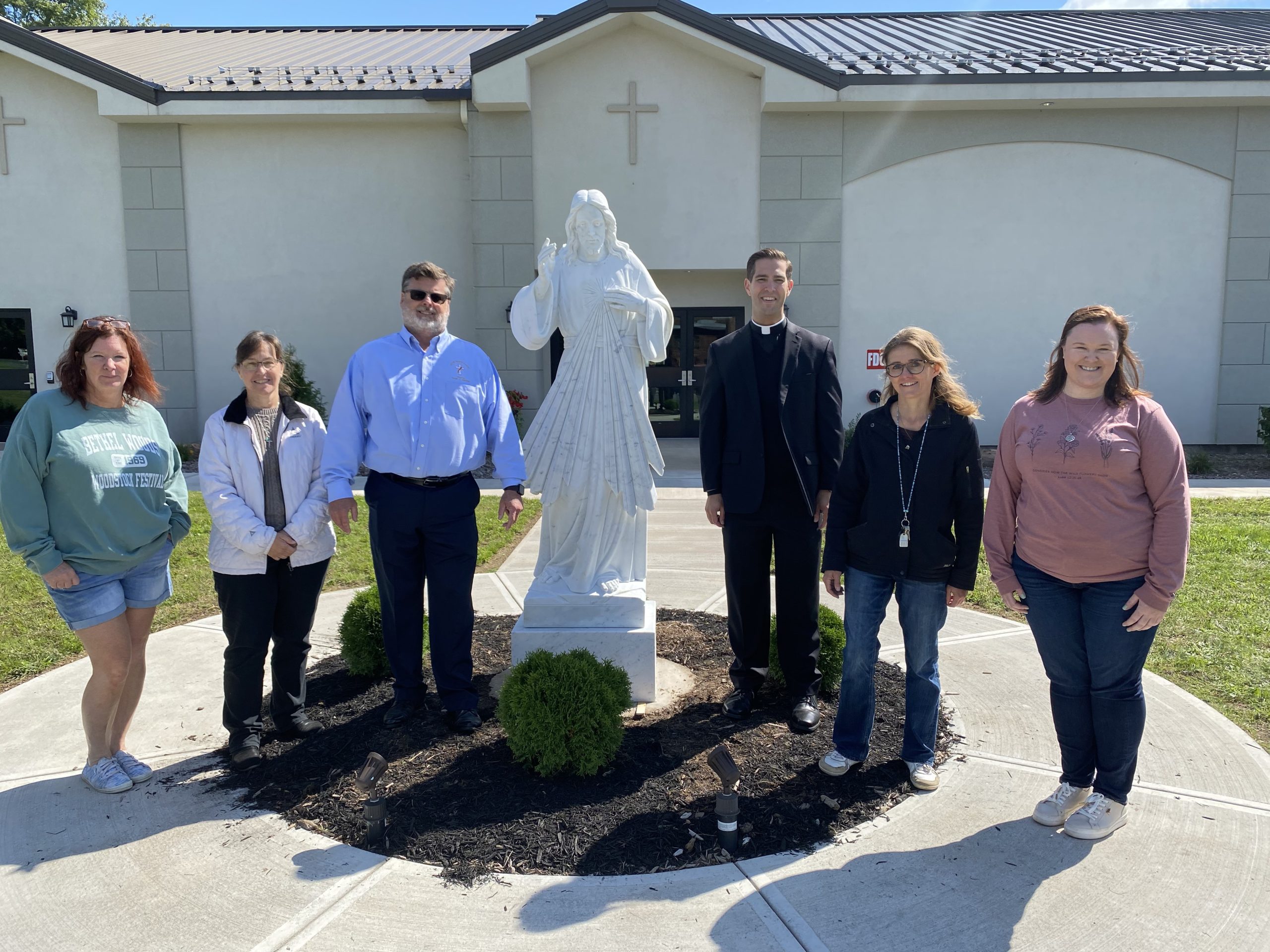
Above: Father Christopher Seibt and staff members of Divine Mercy Parish in Central Square pose last summer with the new statue of the Divine Mercy image.
On May 5, 2000, five days after the canonization of St. Faustina, the Vatican decreed that the Second Sunday of Easter would henceforth be known as Divine Mercy Sunday. It’s a day of special celebration at the Central Square parish of the same name, and this Sunday, April 16, will be no different.
Bishop Douglas J. Lucia will join Fr. Christopher Seibt, pastor, in leading the congregation in prayer and celebration of the feast day, including the blessing of some notable improvements and additions to the parish campus.
One such improvement is the installation of a beautiful statue of the image of Christ as Divine Mercy, a gift made possible through parish donations. The addition of the Italian-made image is much more than a physical improvement or simple statuary, though; it is a means of evangelization according to Fr. Seibt.
“The image of Divine Mercy and the story of the devotion is so inviting,” he told the Catholic Sun when the statue was installed last summer. “Part of living and sharing the Good News is communicating it,” he added, saying that it’s an invitation to “people who are driving past the parish who are in different places in their lives.”
The parish is located at 592 S. Main St. in Central Square (13036) and all are invited to attend the afternoon events:
- 1:30 – 2:30 PM: Confessions will be heard.
- 2:30 PM: Blessing of Recent Developments in the parish by Bishop Lucia
- 3:00 PM: Holy Hour of Mercy including Exposition and Adoration of the Blessed Sacrament and Benediction
- 4:00 PM Procession / Veneration of the Relic of St. Faustina
A reception will follow veneration in the parish hall.
Historical background of the feast
In the 1930s, Jesus chose a humble Polish nun, St. Maria Faustina Kowalska, to receive private revelations concerning Divine Mercy that she recorded in her diary. Saint Pope John Paul II explained at her canonization that “This was precisely the time when those ideologies of evil, nazism and communism, were taking shape. Sister Faustina became the herald of the one message capable of off-setting the evil of those ideologies, that fact that God is mercy—the truth of the merciful Christ. And for this reason, when I was called to the See of Peter, I felt impelled to pass on those experiences of a fellow Pole that deserve a place in the treasury of the universal Church.”
In addition to celebrating the feast, the traditions through St. Faustina were born of praying the Chaplet, the Novena and honoring the image of Divine Mercy, an image Christ Himself inspired in his appearance to the Polish nun. In the vision, Christ appeared with his right hand raised in a blessing and his left touching his garment above his heart. Red and white rays emanate from his heart, symbolizing the blood and water that was poured out for our salvation on the Cross. The Lord requested that “Jesus, I trust in You” be inscribed under his image, and He asked that his image be painted and venerated throughout the world: “I promise that the soul that will venerate this image will not perish” (Diary, no. 48) and “By means of this image I will grant many graces to souls” (Diary, no. 742).