DPC discussions focus on synod, simpler approach to priest evaluations
DSC_1207
By Tami S. Scott, associate editor
A new approach to the process of pastor and priest evaluations is underway in the diocese and it was one of several topics on the agenda for the March meeting of the Diocesan Pastoral Council (DPC). The advisory body meets quarterly at Holy Cross Church in Dewitt.
The updated approach to evaluations eliminates a standing process that was often cumbersome and time-consuming, one that involved meeting fatigue, dread and the exclusion of newly ordained priests.
The updated process includes significantly fewer meetings, is more inclusive, and every priest — not just pastors — will be assessed.
“We listened to the voice of our clergy who said [the process] needs to be streamlined,” said Fr. John Manno, pastor of Holy Family in Fairmount and the diocesan Vicar for Clergy.
The current path will evaluate veteran priests every three years versus every six, and newly ordained priests every year for the first five years of ministry. New priests will also be appointed a seasoned priest to mentor them.
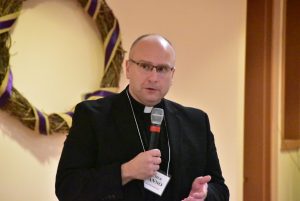
Fr. John Manno discusses updated procedures for clergy evaluations.
“We recognize … the first five years of ministry, just statistically, can be some of the most difficult years in priesthood,” Fr. Manno said. “You’re making that transition from seminary to parish life and so on. So, we want to make sure that that’s a positive transition as we accompany our newly ordained priests into priestly ministry in the diocese.”
All priests will be given more inclusive and exhaustive self-evaluation forms than in the past. The questionnaire format centers on their personal, pastoral, spiritual and intellectual growth, as well as the parish(es) and other ministries in which they’re involved. Additionally, the priests will establish a committee comprised of parish trustees, the pastoral council president, and two (or more) at-large members of the parish(es) as determined by the other committee members. They, too, will be given a questionnaire to complete. Finally, the bishop and priest will meet to discuss the results.
“[This new approach] gives [the priests] the opportunity to really reflect and pray over their experiences, to look back over the things they’ve been part of, things they’ve done,” Fr. Manno said. “I think it offers an opportunity for growth and I think it certainly offers an opportunity for some affirmation.”
Mission strong
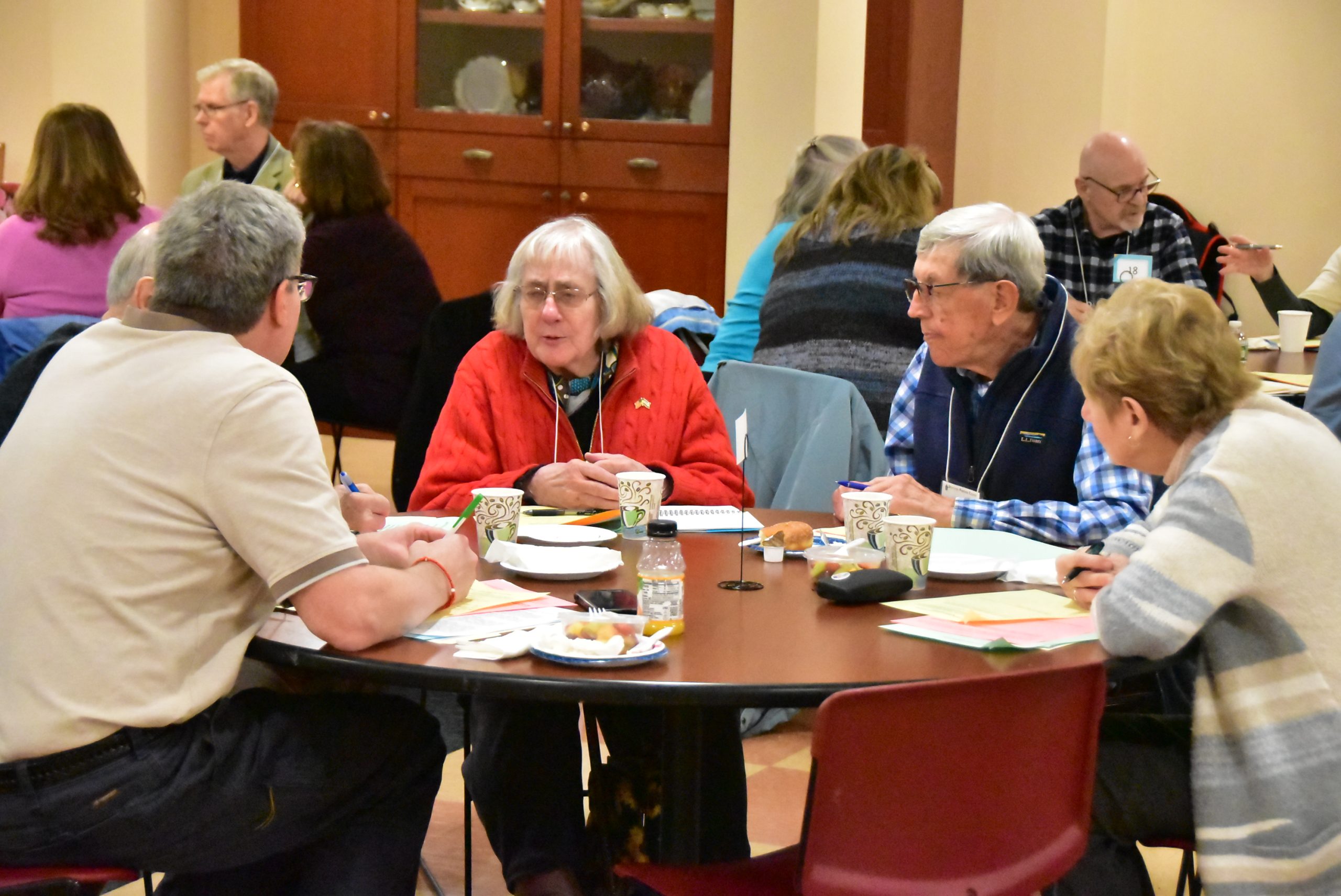
Sister Katie Eiffe, Vicar for Religious and Director of Synodal Planning, presented DPC attendees with three thought-provoking questions concerning the ongoing synodal process the diocese is currently engaged in:
- Where have you witnessed three ways in which the church encouraged and fostered our shared mission of spreading the Good News?
- Where have you experienced or witnessed three ways in which the church structures and life hinder our shared mission?
- What is needed in our Diocese to help all the baptized respond to the call to proclaim the Gospel and live as a community of love and mercy in Christ?
Sister Katie emphasized the need for individual reflection as the groups pondered their responses. “Silence is golden,” she said. “It is our opportunity to still our minds and hearts to invite the spirit in.”
This synodality exercise will ultimately take the form of a report that Bishop Lucia will bring to the worldwide synod in Rome. Synodality
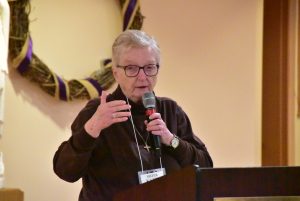
Sr. Katie Eiffe explains procedures for the synod topic discussions.
means journeying together as people of God. It indicates a way of listening to each person, as a member of the Church, to understand how God might be speaking to them. The conversation is meant to be engaging, sincere and transformative.
“Our mission is the mission of Christ, to spread the good news of salvation, and to live as a community of the love and mercy of Christ,” Sister Katie said. “So how have we experienced it? How have we encouraged and fostered the mission of Jesus Christ? And what still hinders us?”
The last step in the exercise was to share insights within their groups and discern common themes.
Top 10 ‘informal’ Diocesan priorities
DPC attendees were asked to consider the top 10 priorities that emerged from the Syracuse Diocesan listening sessions held between November 2021 and March 2022. The following list, which is in alphabetical order, is the result of informal voting and table discussions among the representatives:
- Catechesis/Lifelong Faith Formation
- Evangelization
- Images of Church (such as hierarchical structure, desire for a more inclusive church)
- (Role of) the Laity (especially women)
- (Concern for) the LGBTQ+ community
- Liturgy (such as perceived “lack of reverence,” desire for good homilies, declining attendance)
- Parish Vitality (desire to be more welcoming)
- Prayer/devotions
- Shortage of and Well-being of Priests
- Youth and Young Adults
The DPC will next meet on Saturday, May 4.