There is one sole purpose for the Sacrament of Holy Orders: Service
lucia-house cassock (1)
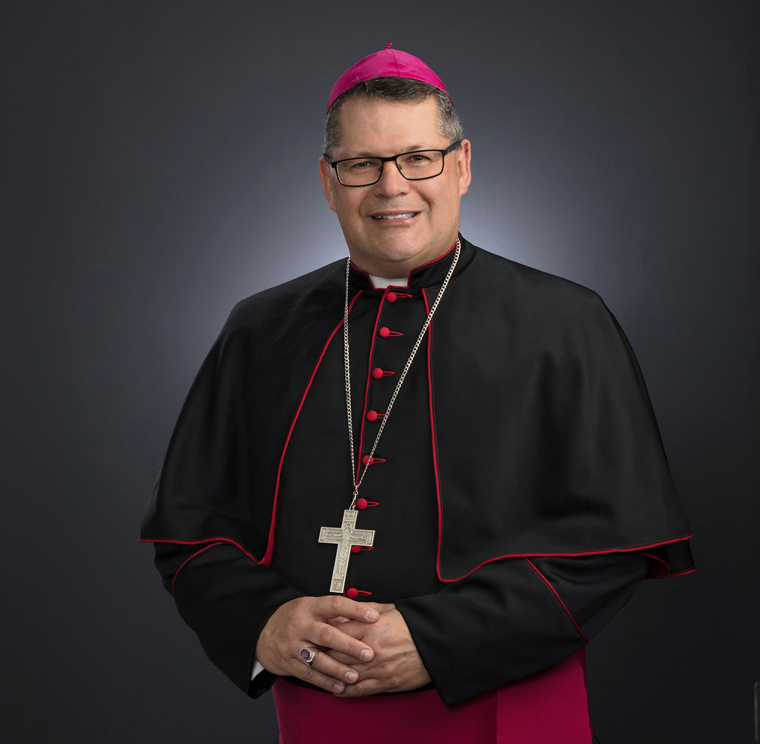
For the next four weekends on Saturday mornings, I will be in church taking part in four different ordination ceremonies. Two will involve the ordination of deacons and two will be for the ordination of priests.
On May 11 at the Cathedral in Syracuse, I will ordain eight candidates from different parishes of the Diocese to the Permanent Diaconate: Joseph Assaf, Jeffrey Dixe, Bernard Feldman, John MacGaffick, John Mihalko, Craig Rheaume, William Smith Jr. and William Sweeney. On May 18 at St. Patrick’s Church in Binghamton, I will ordain two transitional deacons, John Brusa III and Joseph Ryan, who will begin their final year of preparation for the Order of Priests.
On the two following Saturdays, I will join in the Ordination of Priests. On May 25, I will be present at St. Mary’s Cathedral in Ogdensburg to participate in the priestly ordination of Rev. Mr. Carter Pierce and Rev. Mr. Douglas Schirmer. Besides being my home diocese, the reason for my presence at this particular ceremony is that the soon-to-be Father Pierce was a curly-headed 2-year-old in my first assignment as parish priest at St. Raphael’s Church in Heuvelton. Every Sunday, I would see his three brothers, him, and their parents take their place in the front left pew of the church. It has been 24 years since that assignment, and I don’t know where time has gone. Bishop LaValley, who will ordain Carter, was also his pastor at St. Raphael’s, so what a feeling that must be!
The following Saturday, June 1, it will be my privilege to ordain Rev. Mr. Benjamin Schrantz of St. Paul’s Parish in Whitesboro and Rev. Mr. Pawel Zmija, a native of Poland and adopted son of Sacred Heart Parish in Syracuse, to the Order of Priests at the Cathedral of the Immaculate Conception in Syracuse. What a joy it will be to welcome all these new ministers for service at the Lord’s Altar in the Church Universal!
Subsequently, I thought it would be appropriate to refamiliarize ourselves with the Sacrament of Holy Orders. The Catechism of the Catholic Church defines this sacrament in the following manner: “Holy Orders is the sacrament through which the mission entrusted by Christ to his apostles continues to be exercised in the Church until the end of time: thus it is the sacrament of apostolic ministry. It includes three degrees: episcopate, presbyterate and diaconate” (1536).
The Catechism further notes: “Integration into one of these bodies in the Church was accomplished by a rite called ordination, a religious and liturgical act which was a consecration, a blessing or a sacrament. Today the word ‘ordination’ is reserved for the sacramental act that integrates a man into the order of bishops, presbyters or deacons, and goes beyond a simple election, designation, delegation or institution by the community, for it confers a gift of the Holy Spirit that permits the exercise of a ‘sacred power’ (sacra potestas) which can come only from Christ himself through his Church. Ordination is also called consecration, for it is a setting apart and an investiture by Christ himself for his Church. The laying on of hands by the bishop, with the consecratory prayer, constitutes the visible sign of this ordination” (1537).
So, indeed, in the Sacrament of Holy Orders, men are set apart in the Church to be an icon of Christ in the world. Yet, it must not be forgotten the Catholic Church teaches that, “the whole Church is a priestly people. Through baptism all the faithful share in the priesthood of Christ. This participation is called the ‘common priesthood of the faithful.’ Based on this common priesthood and ordered to its service, there exists another participation in the mission of Christ: the ministry conferred by the sacrament of Holy Orders, where the task is to serve in the name and in the person of Christ the Head in the midst of the community” (1591). A key element of this teaching is that there is one sole purpose for the Sacrament of Holy Orders – and it is not “power” – it is “service.”
For me, this call to “service” in the Holy Name of Jesus is the foundation of what the deacon, priest and bishop is to be about in their ministerial lives. It is a service rooted in gospel living whose paradigm is, “the Son of Man who came not to be served, but to serve, and to give his life as a ransom for many” (Mt 20:28). Pope Benedict XVI remarked that Christ’s kingship is not based on “human power,” but on loving and serving others. How then do we all, but with ordained ministers especially tasked to lead this mission, help others to have an encounter with Jesus Christ?
On August 5 of last year, Pope Francis addressed a letter to the clergy of Rome. In it, the Holy Father spoke of the danger of “clericalism.” He defines “clericalism” as a type of “spiritual worldliness.” He states: “When it enters the heart of pastors, it takes on a specific form, that of clericalism … when, perhaps without realizing it, we let people see that we are superior, privileged, placed ‘above’ and therefore separated from the rest of God’s holy people. As a good priest once wrote to me, ‘clericalism is a symptom of a priestly and lay life tempted to live out the role and not the real bond with God and brethren’” – that is, detached and haughty!
The Pope continues: “Concern, then, focuses on the ‘I’: one’s own sustenance, one’s own needs, the praise received for oneself instead of for the glory of God. This happens in the life of those who slip into clericalism: they lose the spirit of praise because they have lost the sense of grace, the wonder at the gratuitousness with which God loves them, that trustful simplicity of the heart that makes us reach out our hands towards the Lord, awaiting food from him at the right time (cf. Ps 104:27), aware that without him we can do nothing (cf. Jn 15:5). Only when we live in this gratuitousness, can we live the ministry and pastoral relations in the spirit of service, in accordance with Jesus’ words: ‘You received without pay, give without pay’” (Mt 10:8).
Of course, gratuitousness – gratefulness – thanksgiving is the very heart of the Eucharist. We express our heartfelt gratitude and prayers for all those who seek to respond to the Lord’s call in their lives, including through the Sacrament of Holy Orders. In turn, we recognize the intrinsic relationship between the Eucharist and the Sacrament of Holy Orders – and the Universal Call to Holiness – that clearly emerges in Jesus’ own words in the Upper Room: “Do the is in memory of me!” (Lk 22:19).
Let me conclude with a prayer for vocations that is found on the Vocations website for the Diocese of Syracuse:
O Jesus, Good and Gentle Shepherd, grant that the men and women from our community may have the grace and the courage to hear and answer your call to the priesthood and religious life. Give them the wisdom to realize that life is a gift. Let them realize their life is part of your plan. Call forth those you have chosen to spread the Gospel message and help them freely respond to a life of service in the Church. May the parents and families of our parish support and encourage our young men and women to search for, follow and answer the call of God in their lives. Amen.