
Uplifting day for Thea Bowman House
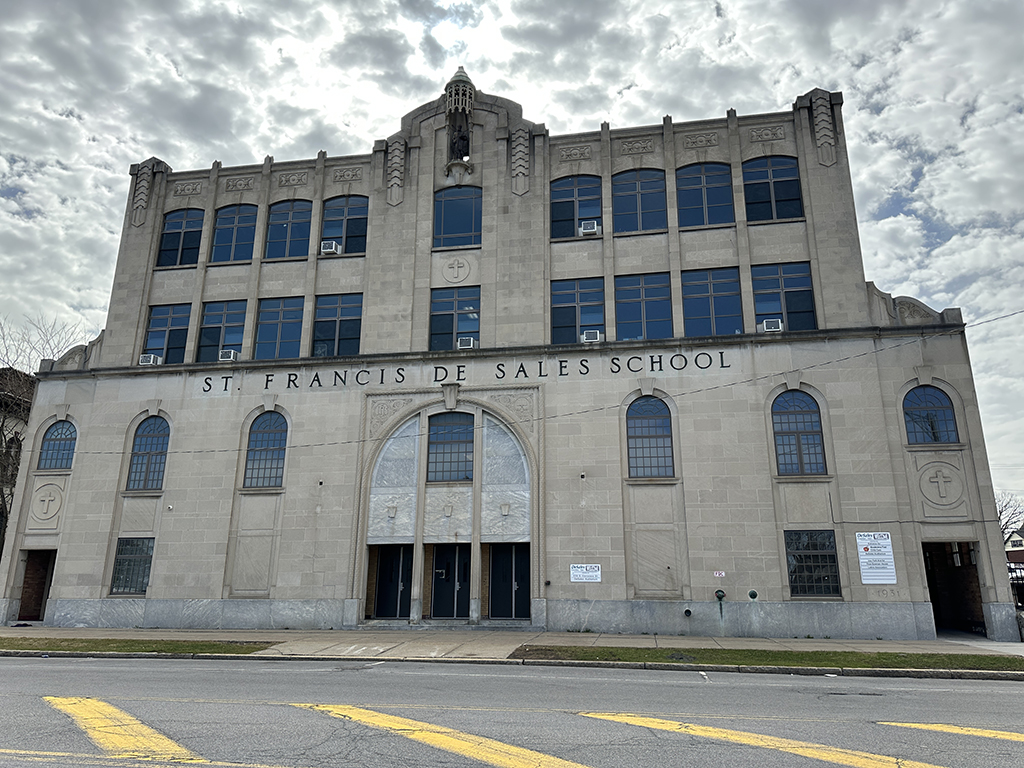
PHOTO 4
After decades of ups and downs, the center now has an elevator
By Fran Perritano, contributing writer
Installing an elevator might not be a big deal for some, but for Jane Domingue, it’s a dream come true.
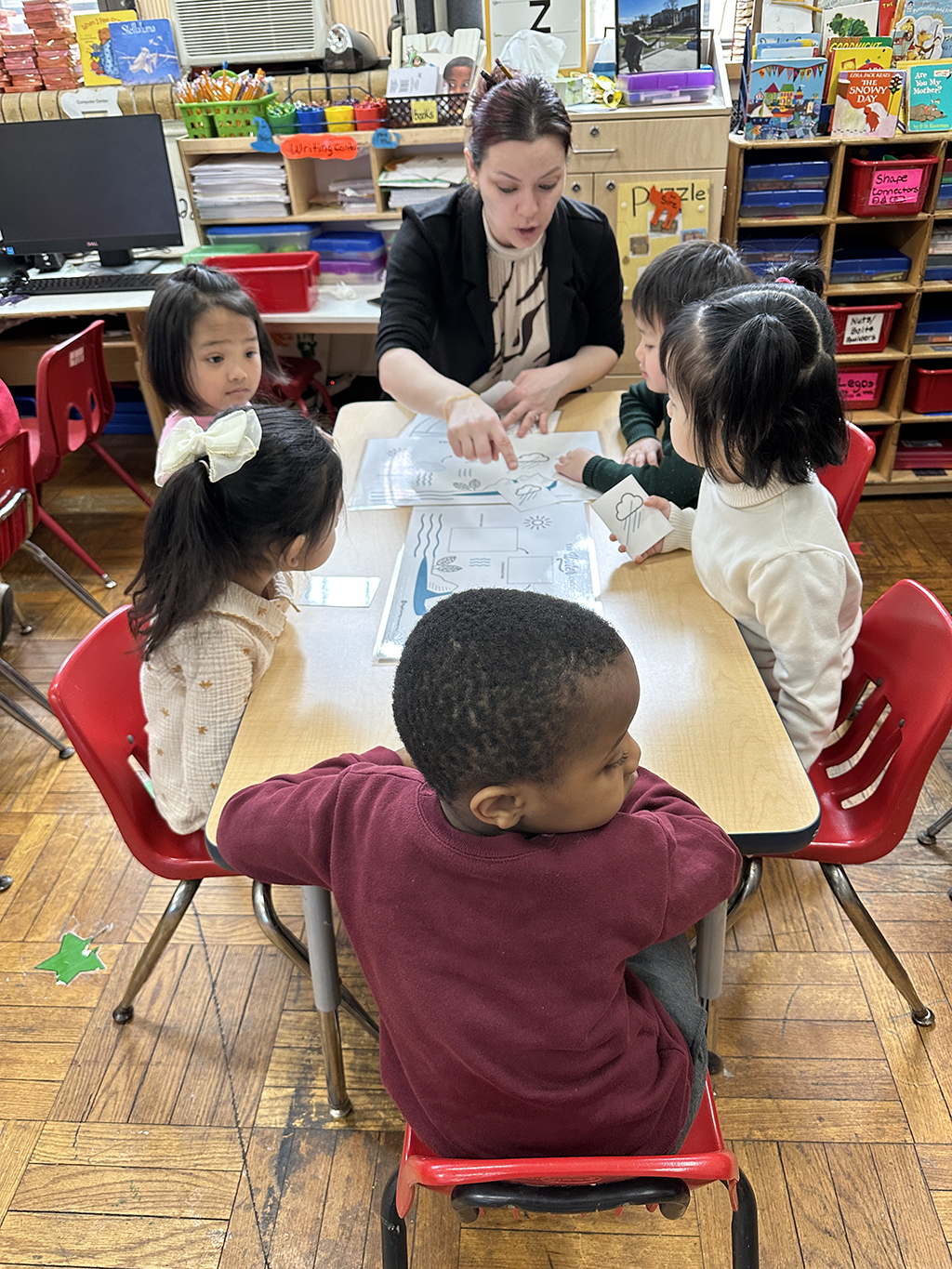
Belmira Bajrektarevic works with pre-K children at Thea Bowman House at the DeSales Center in Utica. On Monday, April 7, the center celebrated the opening of the building’s first elevator that’s been in the planning stages and talked about for several decades.
Domingue is executive director at Thea Bowman House at the DeSales Center in Utica, where a celebration took place April 7, dedicating the building’s first elevator after decades of being talked about and planned.
She has good reasons to be excited.
“First and foremost, the elevator makes it possible for persons with mobility issues to access our programs,” Domingue said. “I recall the little boy with muscular dystrophy who couldn’t continue in our program as his disease progressed. I recall the refugee woman who was the parent of one pre-K student that couldn’t attend his graduation ceremony because she was an amputee who had no prosthesis. I think of our cooks and maintenance staff who have been walking up and down the stairs for years to bring food and supplies to the first and second floors. We also hope that we will be able to rent space on the third floor to not-for-profits that serve the community. The rental income will help us sustain the building for the long haul.”
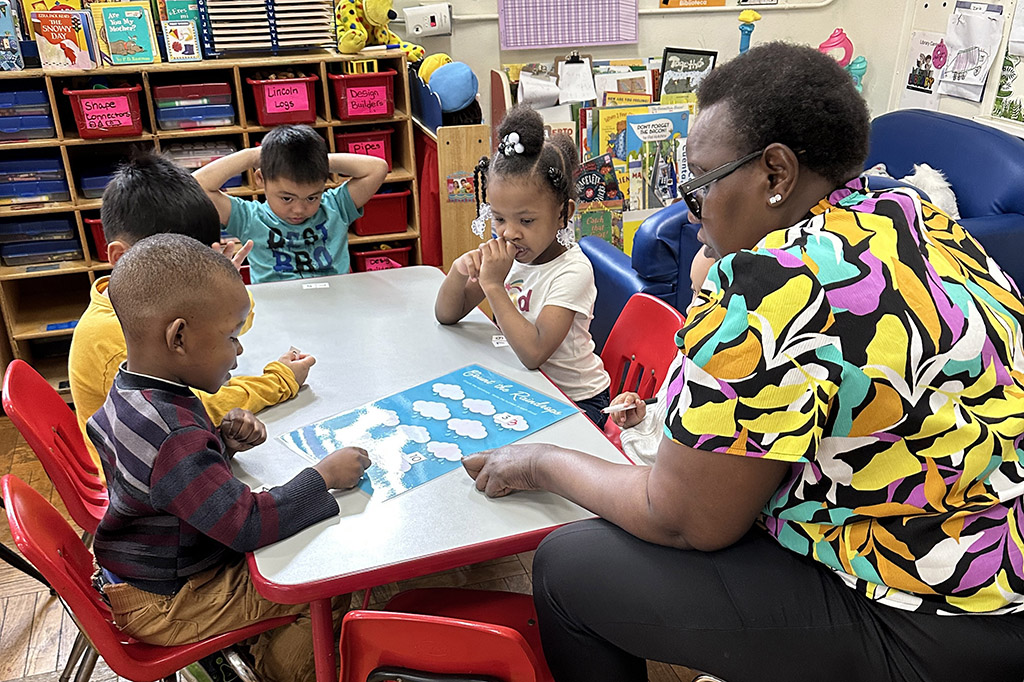
Grace Sunday works with pre-K children at Thea Bowman House at the DeSales Center in Utica. On Monday, April 7, the center celebrated the opening of the building’s first elevator that’s been in the planning stages and talked about for several decades.
Thea Bowman House provides childcare and supportive services to low-income and at-risk families. It also hosts a Universal Pre-K program through the Utica City School District, a program called Kids with Promise for teens and pre-teens, and an emergency food pantry and a clothing shop that offers free clothing to people in need, with an average of 75 to 100 people per month.
The pre-K program serves about 150 children. The after-school program has capacity for 100 school-age children. Kids with Promise averages about 30.
The elevator price tag was $1.5 million and was funded by a grant from Empire State Development, Oneida County ARPA funds, and state and city of Utica grants. The rest was raised by individual donors from the community.
“The generosity of our local community continues to amaze me,” said Domingue, who has been executive director for 29 years and with the organization for 39.
The evolution of the DeSales Center dates to the early 20th century.

Allison Madmoune, regional director of the Empire State Development Center, steps off the new elevator at the DeSales Center.
In 1916, Monsignor Daniel Doody founded St. Francis of deSales School at the corner of Eagle and Elm streets. The first graduating class numbered 14 — all girls.
By 1926, the population of the city had grown, and a site at 309 Genesee St. was chosen for the new elementary and high school. About 1,100 pupils enrolled and it soon became the largest school in the Syracuse diocese.
When the school closed in the mid-1990s, the building began a new life as a place for nonprofit organizations in need of space to grow their missions — including Thea Bowman.
Sandra Wright has been program director at Thea Bowman for more than 20 years and has been involved with the organization since its founding in 1986.
“I am responsible for the childcare supervision, the staffing of the center, site direction and safety of the premises,” she said. “I work with our kitchen manager who oversees meal planning, preparation and food delivery to rooms. We have two nurses on staff who tend to the health care of the children. Two small buses bring many pre-K children to school.”
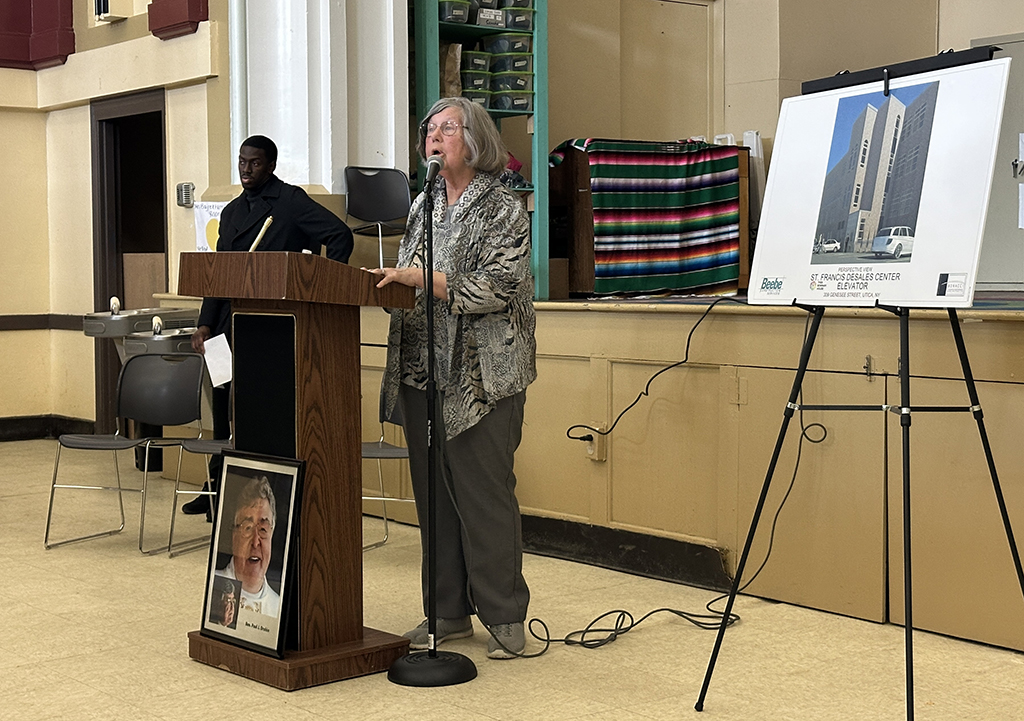
Jane Domingue, executive director of Thea Bowman House, gives remarks during the celebration of the opening of the elevator at the DeSales Center. Domingue has been director for 29 years and with the organization for 39 years.
Thea Bowman House consists of five classrooms. One class is a full day, and the other four rooms have a morning and afternoon class.
“The 2-, 3- and 4-year-olds enjoy literary time listening to stories, puppets, retelling familiar stories, building toys, sensory tables, outdoor playground play, music movement, discovery activities, games and visits to the public library,” Wright said. “In the summer, the little ones go to parks, splash pads, zoo and other field trips. The older daycare children in the summer experience educational time in the mornings.”
The afternoons are filled with outdoor activities. Four days a week, they visit the public pools and parks, use the playground equipment or do sports activities. On Fridays, the program goes to either Lake Delta or Verona Beach for a picnic and beach fun.
“The best part of the summer is the campout,” Wright said. “Before COVID, the older children experienced overnight camping at Camp Nazareth and later Camp Kingsley for five days and four nights. Now, we attend day camp at Camp Nazareth for four days, enjoying all the facilities at the camp.”
She said people she’s taught over the years return, sharing their memories and enrolling their children.
“For most of our former children (now adults), campout was the best,” Wright said. “One of our kids, now a grandmother, reminded me of trips to Enchanted Forest, the campout, playing chess at the Old K of C. And that was 30 years ago!”