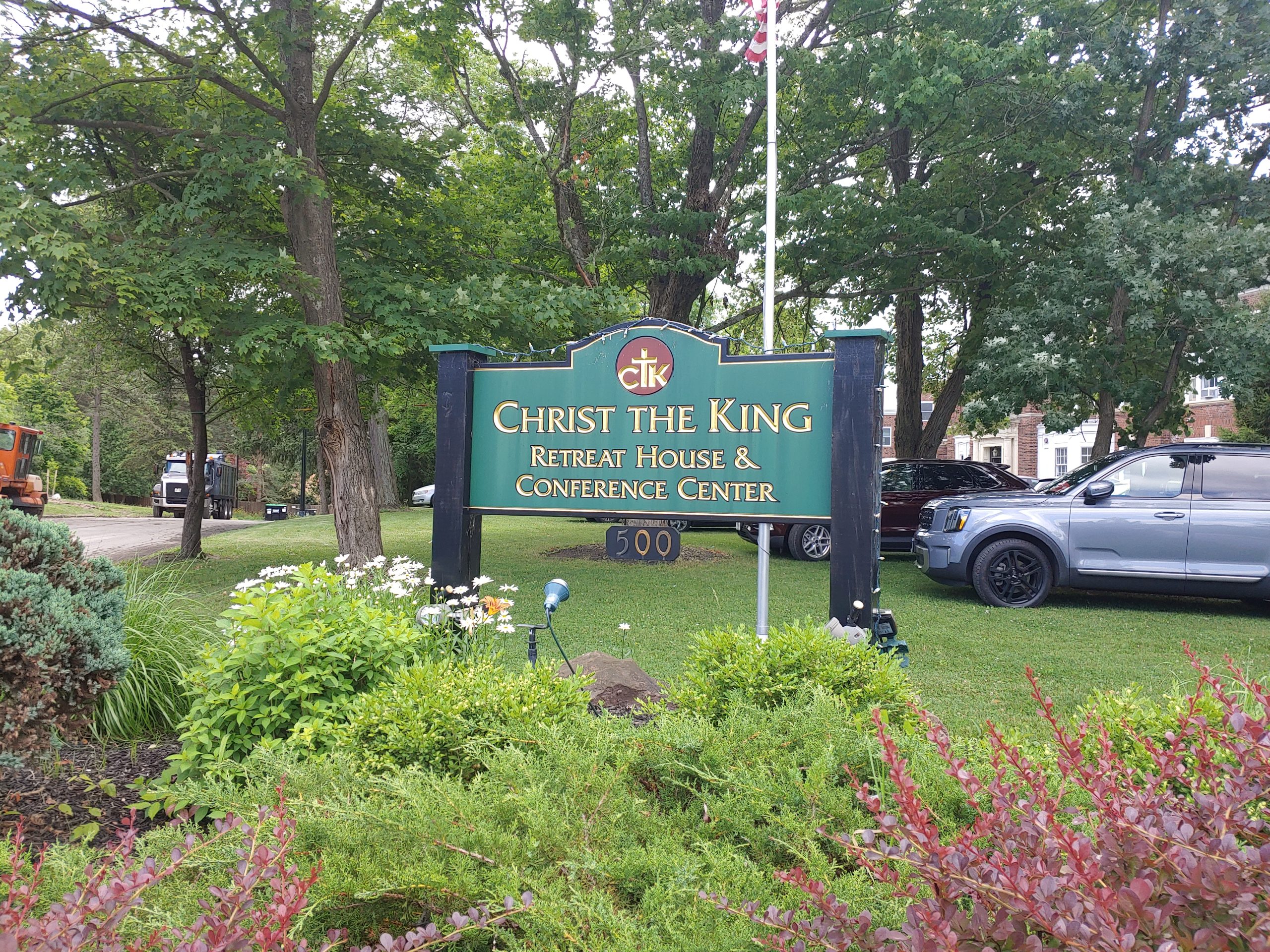
‘A spiritual gem that has served people in our diocese and beyond’
, FC : (0,0,0)
, FC : (0,0,0)
Christ the King Retreat House’s final days of service
Main photo courtesy of Cathy Byrne
By Dc. Tom Cuskey, editor
“It is with mixed emotions that the Diocese of Syracuse announces the upcoming closure of Christ the King Retreat House, effective June 30, 2024.”
This announcement on May 8 from Bishop Douglas J. Lucia to the faithful of the diocese took many by surprise. Purchased in 1994 from the Jesuit Community, the retreat house was a spiritual refuge for many. Individual and group retreats serving countless needs were regularly scheduled. Various diocesan offices utilized the house for programs they offered. With ample meeting space, bedrooms for overnight guests and a full-service kitchen, the house was well suited for the task at hand, including many secular corporate events. More than that, the grounds offered guests a chance to find peace and beauty in nature, an unusual bonus given the urban area street address. But changing trends, an aging building infrastructure and staffing challenges forced the diocesan hand.
“This decision comes after careful consideration and prayer … The Diocese of Syracuse is committed to responsible fiscal management.” Bishop Lucia’s letter summarized the angst and the reality that necessitated the decision. “Closing the retreat house allows us to allocate resources more effectively.”
CTKRH is much more than a storied building and grounds. It is a 30-year history of very special people who made it what it was: a haven of peace in the midst of an often uncertain world. We have had the opportunity to speak with several of those who contributed greatly to the peace and the history.
Trying to find a way
Joan Spector, the house director at the end of its mission, cited a downturn in demand for retreats as a major factor in the decision to close.
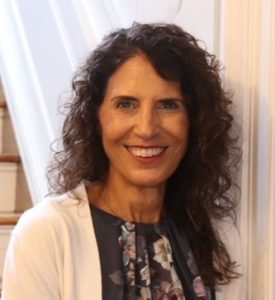
Joan Spector
“It also comes down to people,” she said, adding that the Covid-19 pandemic cost the house a lot of business. “But after COVID, you know, people came back slowly. But when they came back, the groups weren’t as large, and they didn’t stay as long.”
Changing demographic trends took a toll as well.
“I think generationally speaking, Catholics who are more mature, shall we say, used to come on retreats all the time, but the younger generations are not engaging that way with their Catholicism, so they’re finding different ways, right? Which is great.”
Spector celebrates the wins, citing a number of offered events that were well accepted, never losing sight of the mission.
“We’re all about spiritual growth, and helping people connect with that side of themselves.”
In the beginning
Father Michael Carmola was named Christ the King’s first director in 1994, serving for 12 of its 30-year history.
“It’s a beautiful history,” he said. “It served a beautiful purpose. But like all things, it dies.”
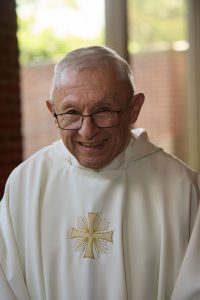
Fr. Michael Carmola
Many of the challenges Fr. Carmola faced were no different than during Spector’s tenure.
“The greatest challenge is trying to get the people to come,” he told us. “So many of them didn’t know about it to begin with. And then once they saw it, and once they were part of it, then they kept going back. So, it was just getting them aware of it.”
He also recognized the changing times today that spelled the end.
“It was much easier then because that was another generation. This generation doesn’t go.”
Fr. Carmola’s memories of his time are punctuated with joy.
“I had the most wonderful staff, they loved it, they loved the retreat. And they gave way beyond their time that they had to do. And they were always happy with people. People always appreciated the warmth.”
A ‘sacred oasis’
Father John Rose took the reins of the retreat house, what he called a “house of transformation,” in 2012, serving until his retirement from active service in 2019.
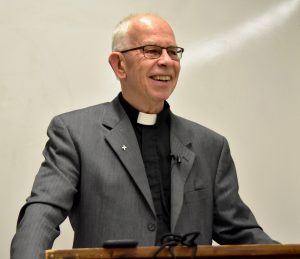
Fr. John Rose
“I mourn and grieve the loss of a spiritual gem that has served people in our diocese and beyond our boundaries,” he told the Sun. The “sacred oasis … helped satisfy the spiritual hunger and thirst of so many seeking a place of solitude. In this solitude, they experienced the wisdom of silence so as to hear God’s voice more clearly.”
Fr. Rose, like those before and after him, also recognized the immense, yet often subtle contributions of the house staff.
They “made it a priority to provide a place of welcome and hospitality to all our guests, especially for those going through life transitions. CTK will always hold special memories for our priests, deacons, religious communities and our faith-filled laity.”
And then there were two
As the clock ticked down to the June 30 official closing (two pre-scheduled diocesan events will still be held on the grounds in August), two mainstays of the excellent staff that past directors raved about were still manning the house, hosting a few scheduled events and tying up many loose ends.
“I can’t tell you the number of people that call in and are just really, really heartbroken that the place is closing,” Barbara Shepard shared with the Sun. She served as marketing director for the past 12 years, closing out her time at the end of June. “I enjoyed the job, I really did. And I enjoyed meeting the people, and I met a lot of wonderful people here.”
“I think a lot of the people that are calling are basically no longer attached. It’s the memories,” Judy Carr added to the conversation. Carr has primarily spent most of her weekends over the past six years as the on-site, go-to coordinator for retreats and events. “It’s like they’re going to lose those memories, and you don’t lose the memories, per se. You’re just not able to make new ones. But yeah, it’s difficult.”
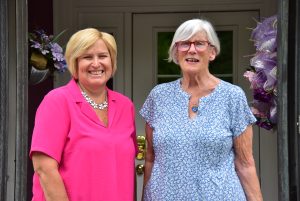
Barb Shepard (l) and Judy Carr
Both Shepard and Carr have witnessed the difficulties, despite coming through a May to June period that’s been very busy with events and retreats — typically busy months through past years as well. But this year they have lost kitchen staff (always a challenge) and worked through a neighborhood road repair project that has required some persistence and creativity for guests to make it to the top of the hill on Brookford Road. But, again, helping people connect is what the job has been all about.
“That’s part of our mission, you know,” Shepard said. “To help people that need to refocus their lives, and they just can’t find [it] anywhere else. And they need that retreat. They feel it’s not just that they want it, they need it.”
Another part of the mission, according to Shepard, was to provide support to all comers, no matter their capability.
“We never turned anyone away because of financial [need]. I don’t know if it was good or bad.”
Staff never said “no” to an opportunity either.
“We’ve done our Valentine’s Day cabaret, the Mother’s Day brunch,” Carr recalled. “I mean, it was super intensive work. I mean, yes, we killed ourselves. But we had a blast and the people that attended them had a blast.”
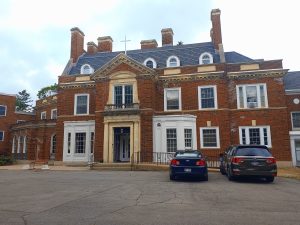
A recent exterior photo of the Retreat House (Courtesy of Cathy Byrne)
Both Carr and Shepard have been busy in the past weeks helping past patrons take possession of memorial bricks they’ve purchased, items they have donated and similar loose ends. They are also working to make the most of furniture and items that have useful life left in them.
“Notre Dame High School is refurbishing their chapel. And they would like things for their chapel,” Carr said. “There’s so much furniture that, I just think of Catholic Charities. I think we can do a lot, a lot of good, you know, and that really makes me happy. That makes me really happy.”
Asked about favorite memories, Shepard could not narrow down to one or two.
“Wow, that’s hard. Because there have been so many days where it’s just been … it’s just been fun. You know, and the people that I work with, even people from the diocese that I’ve worked with, and have helped me out … you know, we’ve had a good time.”
Carr will remain on hand to close out the last couple of events and bring closure to the ownership of the property, which is for sale.
Moving on
“We understand that this news may be disappointing to some. We are committed to working collaboratively with existing retreat groups to explore alternative options for their future gatherings. The Diocese of Syracuse remains dedicated to fostering a vibrant spiritual life within our community. We will find new ways, working closely with our parishes and diocesan ministries, to offer a variety of experiences and resources to support and engage the faithful.”
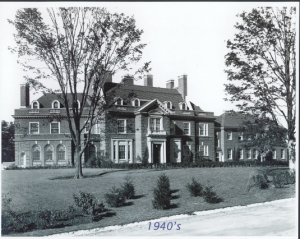
A 1940’s street view of the House.
-Bishop Douglas J. Lucia
In these times, when parishes have closed or merged to reflect changing trends among God’s faithful, the closing of a facility like Christ the King Retreat House is not to be taken as a sign of diminishment, but rather as a valuable resource that has served well and now completed its mission.
As Fr. John Rose reminds us, “Let us all give thanks to God with grateful hearts that we were so blessed to enjoy this sacred space in our midst. May Christ’s peace continue to guide us all.”
Editor’s note: Christ the King’s website has been relocated to the Diocese of Syracuse online home; stay in touch with developments by visiting https://syracusediocese.org/christ-the-king-retreat-house.