Gene Fisch’s family story transcends time
OLYMPUS DIGITAL CAMERA
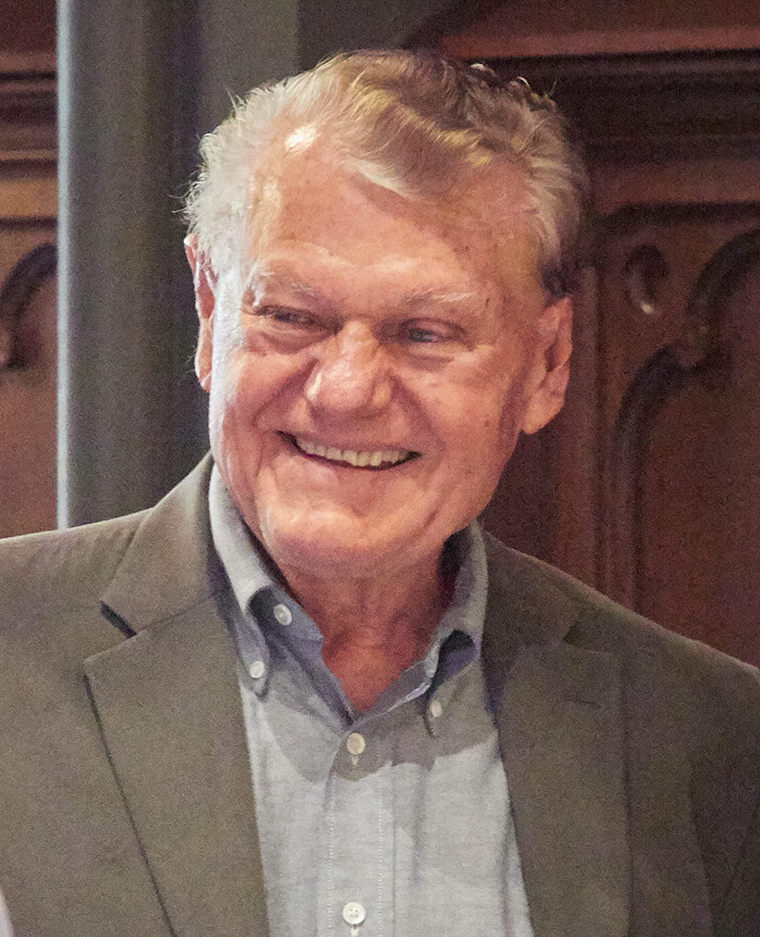
Gene Fisch.
By Dan Hurley
Contributing writer
Gene Fisch has a story to tell. It’s an uncomfortable story, yet one infused with love and thanksgiving.
Why tell it now? That’s another story.
The genial Fisch greets you with a smile, eye contact, a strong handshake and a pat on the back. The schoolboy sports star at Sacred Heart Academy, ’61, still carries himself like the athlete who dominated the Syracuse Parochial League basketball courts.
Fisch left Syracuse after high school for a basketball scholarship at New York University where he received his bachelor’s and MBA. After graduation he served in Syracuse City government and embarked on a successful business and entrepreneurial career.
Named to the Greater Syracuse Sports Hall of Fame in 2011, he returned to Syracuse for good in 2013. Sunday mornings you can find him as an usher and greeter at the Cathedral of the Immaculate Conception where he has reconnected with Father Bill Jones, his childhood friend.
Behind that easy manner and smile is a burning desire to share his family’s story. A story that is loaded with faith, love, resilience, gratitude and inspiration. A story that pulls back the curtain on the cruelty of oppression and the atrocities of war. And finally it is an American immigration success story revealing how Catholic Charities, the Felician sisters and a Syracuse parish and neighborhood embraced a 7-year-old boy and his family.
The story has been shared in two books by Fisch, “All Love Comes Home, A Promise of Truth” and the most recent, “To Have a Tomorrow, A True Story.”
His family survived five hostile occupations of their native Poland. He recounts their life on the run, hiding in the dense forests of Eastern Poland, near starvation, disease and fearing the discovery of his parents’ roles in the resistance movement. He describes his mother, Bronislawa Szafran Fisch, as an intellectual and fearless resistance figure and his father, Andrew Fisch, as a craftsman with a steely resolve to match his undying faith. His parents, along with his siblings, Dominic, Monika and Longina, play roles.
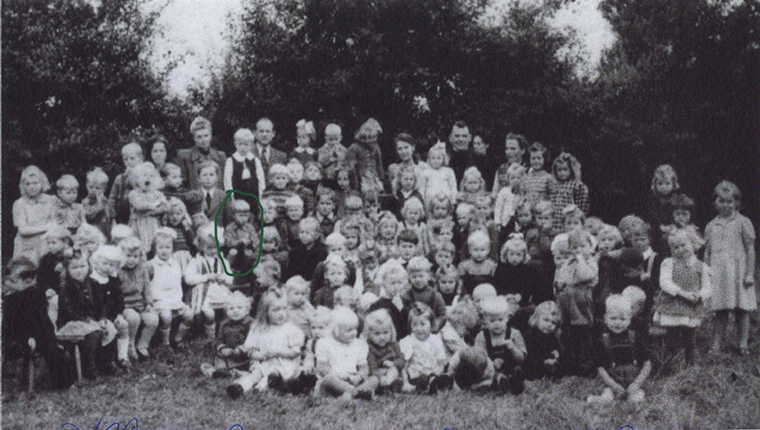
Gene’s family was part of a displaced persons camp in Germany following World War II.
Gene’s life began with a 1942 rural birth when his mother had to bite off the umbilical cord for her infant to survive. He tells of being snatched from his mother’s arms to be part of a cruel Nazi acid experiment that left him with lifelong scarring. There were work camps and finally the family was used as human shields on Russian munitions and troop trains as World War II lurched to a chaotic close.
Why now? Why come forward with this story 80 years later? “Let’s just say devotion to one’s mother is a powerful thing,” said Fisch. “These stories are the ones I learned from my mother and other family members. It was my mother’s wish that all knew what happened.” When his mother died in 1984 he felt he became “the keeper of the flame.” Bronislawa knew the power of the story and would say often that “all information is political.”
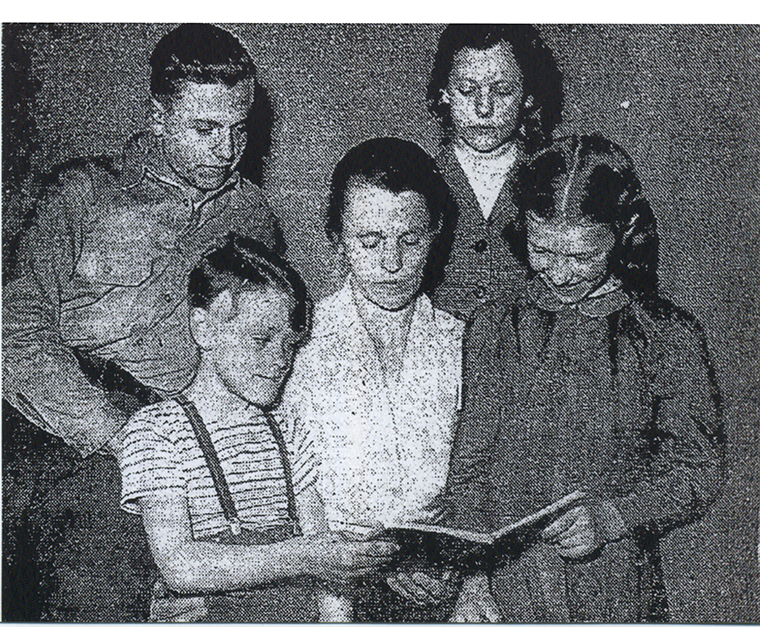
Gene and his siblings with their mother Bronislawa.
In addition to the maternal mandate, he feels an urgency for people to appreciate the larger picture. Embedded in the family story is a geopolitical message. That includes an appreciation for the atrocities inflicted on the Polish people over the first half of the 20th century when a third of their population simply disappeared.
“History tells us that Poland has been subject to hostile occupations or systematic persecutions for close to 1,000 years. Many sympathize with the story of the Holocaust and the Jews, but that is far from the only narrative,” he cautions.
He wants people to know the end of the war was not the end of their problems. Russia’s Josef Stalin had a strong hand in a post-war world and claimed Poland as a “prize.” All told Nazi Germany and Soviet Communism killed four million Polish citizens over a 10-year period starting in 1939.
Indeed, when George Santayana said “Those who do not learn history are condemned to repeat it” he had courageous people like Fisch in mind. “It is important for people to know where they came from and what they have endured,” Fisch said. “One only needs to look at what is happening in the Ukraine and Middle East to see the cycle repeated.”
There have been pockets of optimism. The late 1970s saw the Solidarity labor movement rise in Poland, bringing about the end of Communist rule. The Solidarity movement coincided with the naming of Polish Pope John Paul II in 1978. Poles took up the new Pope’s Fatima-inspired admonition “Be not afraid” as the world cheered. And Fisch and Polish-American groups were successful in carving out a prominent place for the Slavic persecution to be portrayed in the Holocaust Museum in Washington when it opened in 1993.
Andrea Brown, a Cathedral parishioner who knew Fisch at Sacred Heart, is touched by the power of the books but more so by Fisch. “I find it nothing short of amazing that Gene is able to hold on to a beautifully positive outlook on life. His success as a loving father and grandfather attests to the resilience which comes from a strong foundation of faith and love.“
He has two talented sons. Gene, Jr., lives in New York and is an adjunct college professor plus a Broadway producer. His younger son, Dr. Matthew Ronsheim, has twin daughters and lives in Lexington, Mass., and is a scientific officer and executive at a global pharmaceutical company in the Boston area.
Gene knows his window of opportunity is closing. “At my age, I am one of the diminishing number of survivors of the horrors of this period in history. I felt it important to get this history down, not only for the next public generations, but for my own children and grandchildren. They should know what previous generations endured and triumphed over so that they could have the liberty offered by this great nation.”
For Gene Fisch, Thanksgiving comes every day.
“All Love Comes Home” ($39.95 + $5 S/H) and “To Have a Tomorrow” ($29.95 + $5 S/H) are available at GeneFischStory.com. They are also available locally at the Onondaga Historical Association, Barnes & Noble and The Catholic Shop, 201 E. Laurel St., Syracuse.
Dan Hurley is a parishioner of the Cathedral of the Immaculate Conception and a member of the Catholic Sun Board of Directors.