‘The Divine Surgeon will see you now’
ChatGPT Image Mar 16, 2026, 10_02_25 AM (1)
A revised Sacrament of the Sick goes into effect this Easter
“Jesus Christ is the same yesterday, today, and forever” (Heb 13:8). The author of the Letter to the Hebrews captured this foundational element of the glorious, divine nature of our Savior in this simple, humble verse.
Jesus never changes, but practice of the faith does undergo periodic review and updating. The goals: theological accuracy, unity, and facilitating pastoral applications, among others. Take, for example, the ongoing effort to revise and update some of the texts used to celebrate and share our faith.
“This is a process that has been taking place over many years since the revision of the Roman Missal in 2010,” according to Joshua Corcoran. The diocesan director of Liturgy and the Order of Christian Initiation for Adults (O.C.I.A.) shared that “last year, we received a new translation of the Order of Christian Initiation of Adults, and next year we will implement a new edition of the Liturgy of the Hours.”
This year, it is the Order of the Anointing of the Sick and their Pastoral Care that is being updated. The revised text was made available for use on Feb. 11 of this year. It becomes mandatory for use in United States dioceses next month on Easter Sunday, April 5.
The revised edition is a retranslation of the English text from the Latin typical edition, or the official Latin text of a document.
“The sacramental formula, that is, the words the priest says at the time of anointing, has not changed,” Corcoran said. “In this new edition, instructions for pastoral practice have been made clearer, and adaptations that have developed in the last 40 years have been addressed.”
Is it the Sacrament of the Sick or the Last Rites?
This is a question that may cause confusion among the faithful.
“People are really confused,” Father Dan Muscalino said. “When they think of Anointing of the Sick, they think of it as anointing of the dying.”
Father Muscalino is pastor of St. Francis of Assisi Parish in Marcellus and is a longtime diocesan educator. He spent about 40 years as a teacher in diocesan high schools in Binghamton and Syracuse and currently teaches in the diocesan Formation for Ministry and Deacon Formation programs. He has seen the trepidation a hospital patient can unnecessarily experience at the sight of a priest.
“My mother used to say, ‘Don’t call the priest.’ That’s how they thought. Father is in the room … it must mean you’re going to die.”
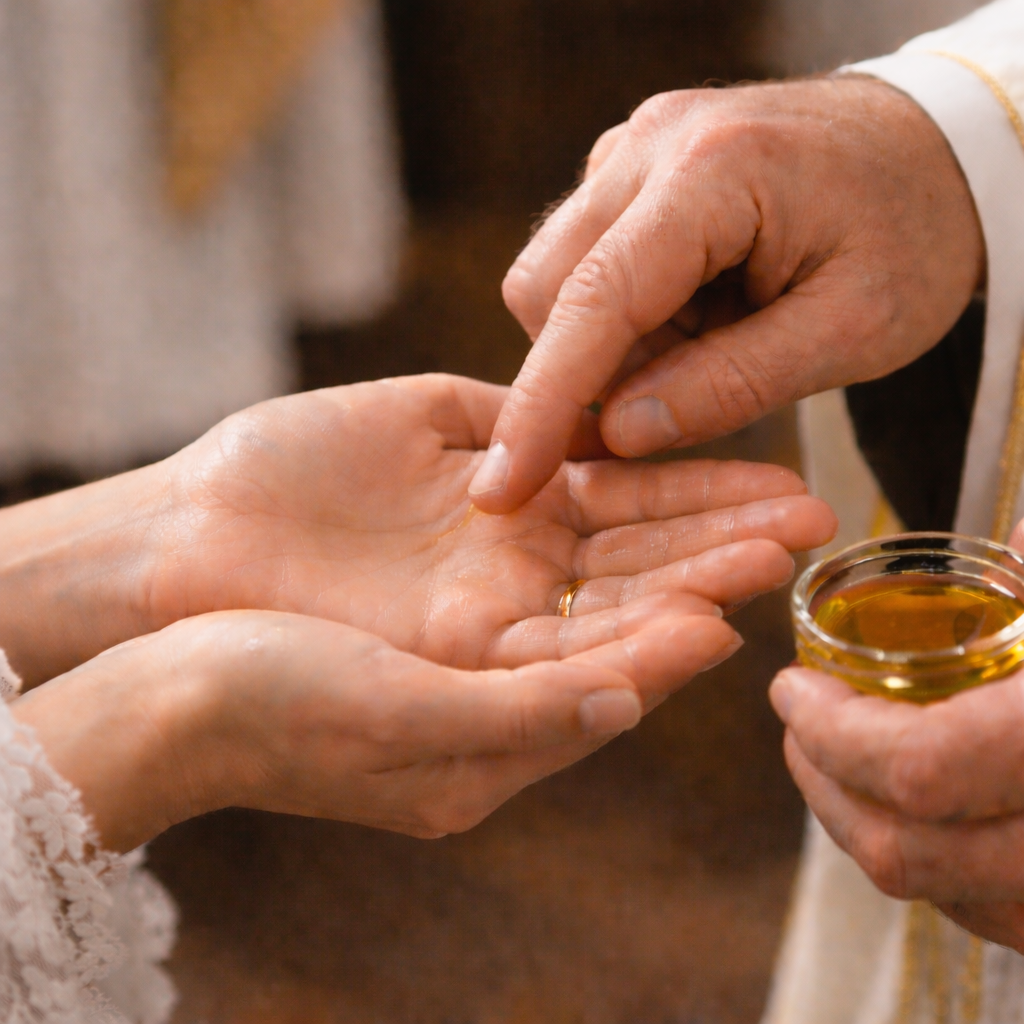
Many among us likely remember the term Extreme Unction, more commonly known as the Last Rites or anointing at the time of death. The Sacrament of the Sick, or anointing of the sick, is just one part of what we refer to as the Last Rites, but the Sacrament also stands alone as a sacrament of the living. It is intended to be ministered to the sick as a means of promoting spiritual and physical healing and bringing peace to the patient.
“That’s mentioned in the Epistle of James,” Father Muscalino said. He referenced the specific Scripture passage James 5:14-15 that essentially says, “if there’s someone sick among you, summon the priest of the church and let them anoint with oil.
“And it’s a prayer for healing,” Father continued. “We do pray for physical healing, but also obviously spiritual healing and psychological healing. It brings a great deal of comfort to people.”
What’s the difference?
There really should be no confusion on this topic. Any ‘difference’ is more about what is in common rather than in conflict.
Following the Second Vatican Council, the understanding of the Sacrament of the Sick was amplified to offer spiritual and even physical comfort to Catholics dealing with illness or preparing for hospital procedures and surgeries. The danger of imminent death need not be present. Pope Paul VI advocated for “a wider availability of the sacrament and to extend it — within reasonable limits — even beyond cases of mortal illness.”
While the sacrament is administered to an individual, the Catechism of the Catholic Church states that those anointed should be “assisted by their pastor and the whole ecclesial community, which is invited to surround the sick in a special way through their prayers and fraternal attention” (CCC 1516). “Like all the sacraments, the Anointing of the Sick is a liturgical and communal celebration … it is very fitting to celebrate it within the Eucharist” (CCC 1517). Special healing Masses are often celebrated in parishes where community members are anointed during the liturgy.
As to what is considered as “last rites” administered to someone in danger of dying, Father Muscalino explained that the Sacrament of the Sick anointing is one of four parts that comprise the Last Rites. They also include Viaticum (Eucharist as “food for the journey’), an Apostolic Blessing, and the Sacrament of Penance (Confession).
“It’s sacramental confession, if the person can participate,” Father added, “but the anointing will [also] take care of the forgiveness of sins,” in the event that the patient is unable to communicate.
The real challenge that exists today for those in need of the Sacrament and rites is also an issue of communication. In short, it’s incumbent on the patient’s family to let their parish office know early on that their loved one is in the hospital and desires anointing. HIPAA confidentiality policies make it very challenging for a pastor to know if a member of his congregation is hospitalized. A family call to the parish when a loved one is admitted helps the priest and the family. Josh Corcoran agrees.
“Do not wait until the last minute to request the Anointing of the Sick,” he said. “Hospitals have priest chaplains either on staff or on call, who may be able to serve your needs quicker than your pastor, especially during the night.”
So, when at all possible, be proactive. Connect with your priest for the Sacrament of the Sick to be conveniently administered before it’s an emergency.
Deacon Tom Cuskey is the former editor of the Catholic Sun and currently serves as a part-time diocesan chaplain at Upstate Medical’s downtown and Community campuses.