A new chapter in seminary formation
Hage cr
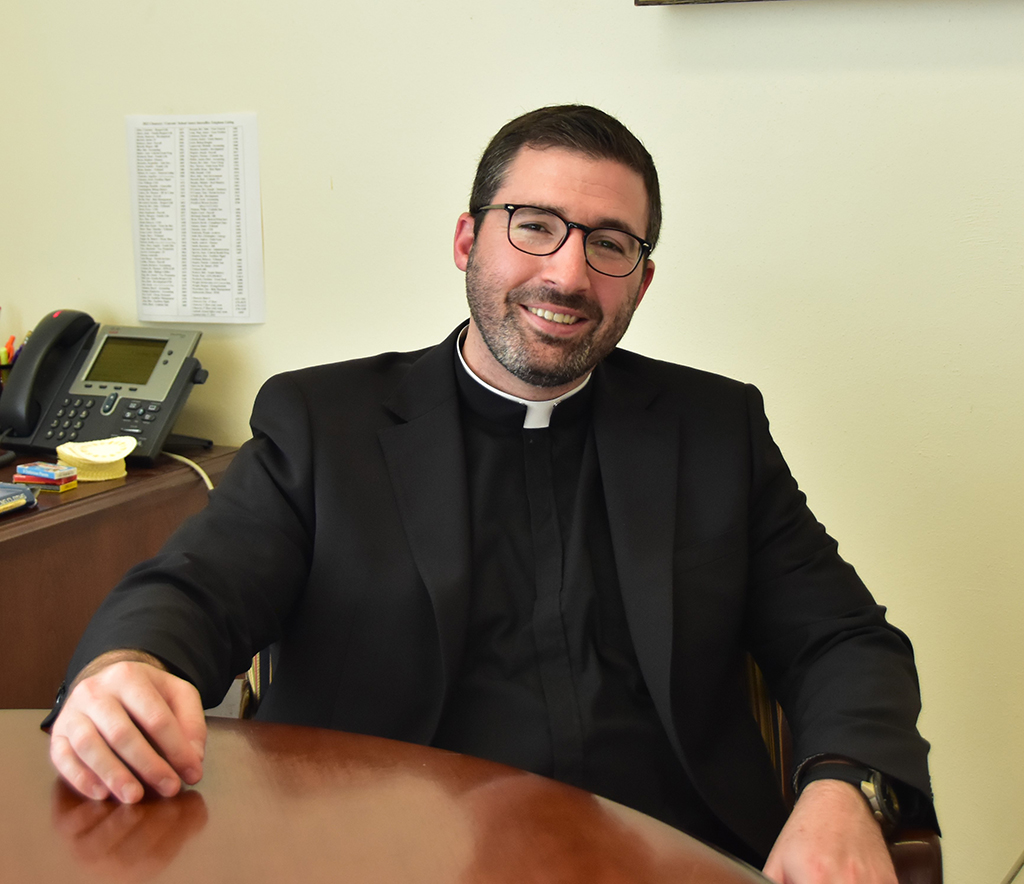
Fr. Jason Hage is director of the Office of Vocations.
By Father Jason Hage
Director of the Office of Vocation Promotion, Diocese of Syracuse
If you’ve seen the new diocesan seminarian poster, you may have noticed unfamiliar titles under the men’s names. Instead of “Theology I” or “Theology IV,” you’ll see stages like Propaedeutic, Discipleship, Configuration, and Vocational Synthesis. These titles mark a major renewal in the Church’s vision for forming priests in our time.
Earlier this year, every seminary in the United States began implementing the Program of Priestly Formation, Sixth Edition (PPF6). This national framework, rooted in the Vatican’s Ratio Fundamentalis Institutionis Sacerdotalis (2016), reflects the Church’s desire to form priests who are more than scholars — they are to be missionary disciples, configured to the Heart of Christ the Good Shepherd. The goal is not simply academic excellence, but the integral formation of the whole person: Human, Spiritual, Intellectual, and Pastoral.
At the heart of this renewal is the conviction that a man must first become a disciple before he can become a priest. The opening Propaedeutic Stage is a year of conversion. Seminarians step away from the noise of modern life to grow in silence, prayer, and fraternity. They live in community, attend daily Mass and Eucharistic Adoration, and learn basic disciplines of virtue, stewardship, and self-knowledge. This year provides a foundation of authentic discipleship before formal seminary studies begin.
The Discipleship Stage builds upon that foundation through rigorous study of philosophy, history, and Catholic thought. Seminarians also serve in local ministries, such as soup kitchens, nursing homes, and catechetical programs, as they grow in the habits of pastoral charity. During this period, they discern their readiness for the next stage by learning to integrate prayer, study, and service into a single rhythm of life.
The Configuration Stage is where theology takes center stage. Seminarians study Scripture, Church teaching, liturgy, and moral theology while deepening their relationship with Christ the High Priest. They serve in parish internships, preach in formation settings, and receive the ministries of Lector and Acolyte as they prepare for ordination to the transitional diaconate. This stage seeks not only to educate but to configure hearts — to make them more like the Heart of Jesus.
Finally comes the Vocational Synthesis Stage, a new and exciting development in PPF6. This stage begins after a man’s ordination to the transitional diaconate and unfolds within the diocese he will serve. For at least six months, the new deacon lives and ministers full-time in a parish, learning the rhythms of pastoral life — celebrating Baptisms, preaching at Sunday Mass, accompanying the sick and dying, and preparing couples for marriage. It is a time when all previous formation is integrated and lived among the People of God.
But this renewal in priestly formation also reawakens the role of the People of God in the mystery of vocation itself. The Program of Priestly Formation reminds us that seminarians do not grow into priests apart from the Church, but within her life and love. Formation happens not only in seminaries but in families, parishes, and friendships that model faith and encourage holiness. Every prayer offered, every word of encouragement, and every act of generosity becomes part of the Lord’s work of forming shepherds for His flock.
The vocation of each seminarian is born from — and sustained by — the holiness of God’s people. When parishioners pray for seminarians by name, support the Annual HOPE Appeal that funds their education, or personally encourage a young man to consider the priesthood, they share in the sacred task of forming missionary disciples. The renewal of priestly formation is, in truth, a renewal of the whole Church — reminding us that together we raise up the next generation of holy priests for the People of God.